Embrace technology, AI, migrant labour to bridge widening skills gap – PSC Chair
Business
Politics
August 11, 2026
Share this article

Click to view full size
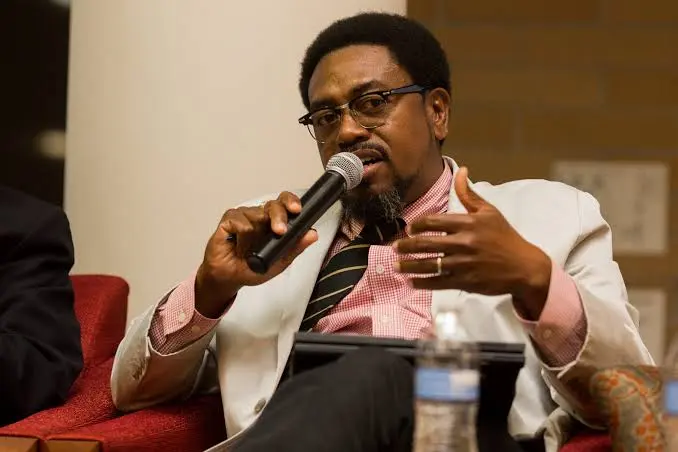
As Guyana’s unprecedented growth across all sectors continues to place demand on the local workforce, Chairman of the Private Sector Commission (PSC) Gerry Gouveia Jr has underscored the importance of embracing technology and artificial intelligence (AI) to help address these challenges. Speaking during the Energy Perspectives podcast on Monday, Gouveia Jr emphasised that the current labour shortages can also be addressed by continuous upskilling of the workforce as well as turning to migrant labourers. “…that’s the only way we can continue the pace of growth, its embracing technology with our workforce, migrant labour, continue upskilling and finding some way of engaging our diaspora to do remote work, contract work or so on, giving them an opportunity to come back home,” he noted.
On embracing technology, Gouveir Jr said “we have to embrace things like AI that act as force multipliers and that allows us now to take one Guyanese and allow them to do the work of ten”. In fact, he encouraged persons, especially young entrepreneurs, to be trained in this area. “Learn how to use technology to be a force multiplier, it will give you a competitive advantage. Learn how to use AI, learn how to implement the resources that are available out there to make sure that whatever action you’re doing, has a ten-x result,” he noted. Apart from embracing technology, the PSC head underscored the importance of continuous training and upskilling of the local workforce to keep up with the country’s economic growth. In fact, he posited that lots of opportunities exist now to train and retrain Guyanese. “The fact is, we can now certify our lawyers in Guyana, that was not the case years ago, you had to go Trinidad for that…next, hopefully, some flight schools, we can start putting pilots to be certified in Guyana. We have engineers that are currently being certified in Guyana,” he outlined.
“Academically, the fact is, with the GOAL (Guyana Online Academy of Learning) programme, you can get a PhD now for free, from internationally-accredited universities,” he added. Gouveia Jr also referred to the aviation training facility, the tourism and hospitality training institute, and the oil and gas training centre. He also highlighted ExxonMobil’s investment in science, technology, engineering and mathematics (STEM) education across the country. “There’s so much opportunity now to upskill yourself. It really now comes down to individual Guyanese to take advantage of it,” he noted. Notwithstanding, the PSC Chair explained that the reality is there are not enough Guyanese to do the work needed in the expanding and emerging industries across the country, citing the population size of 1,025,334 as of 2025, according to the Bureau of Statistics. “Let’s say for example, I’m a very good safety manager…there’s only one of me and as I mentioned, every other industry is growing and they all need a me,” Gouveia Jr highlighting, noting that migrant labour is needed. He said Guyana would need to adopt systems like Dubai, where imported labour becomes necessary due to rapid economic growth. Qatar and Dubai, both major oil-producing economies, have seen expatriates grow to make up over 50 per cent of their populations. According to Gouveia Jr, “we have to start learning how do we utilise migrant labour” whilst making sure that Guyanese are not disadvantaged. Vice President (VP) Dr Bharrat Jagdeo previously explained that locals will be given first preference to fill these human resources gaps and that imported labour will be guided by a migration policy. Already, the Government has permitted some companies to import labour for big projects, including the Demerara River Bridge. However, these instances were done in limited amounts and in an ad hoc manner. The migration policy will allow for this process to be more formalised and according to Jagdeo, the Government will ensure the country does not become overrun by foreigners. This is where the electronic identification card will play a significant role in tracking the movement of people in the country. Foreign nationals are being issued a card distinct from the one provided to Guyanese citizens. The VP has also cautioned against xenophobic attitudes, reminding the public that there was a time in the country’s history when Guyanese themselves sought employment opportunities abroad. Just a few months ago, Labour and Manpower Planning Minister Keoma Griffith made it clear that foreign workers are not a threat to Guyanese. “Migrant labourers do not present a threat; they pose no threat to Guyanese. It is a pathway for competitiveness, and so even when every foreigner, whether from the diaspora or otherwise, comes to Guyana to work, they do not come to bring a threat to our labour force. They come to build on what we already have,” Griffith had said during a Stakeholder’s Forum on “Bridging Guyana’s Skills Gap: Diaspora and Migrant Labour” in May.
Business
Politics
Need the bigger picture?
Share this article
Comments (0)
Download our mobile app
The portable companion to gazettE. Get notifications, track read articles, and more. The latest news from Trinidad and Tobago, in one place.