Wilting crops & cracked earth pose major challenges for Berbice farmers as El Niño kicks in
Business
Politics
August 24, 2026
Share this article
Click to view full size
…farmers forced to pump water, install sprinklers as groundwater levels fall
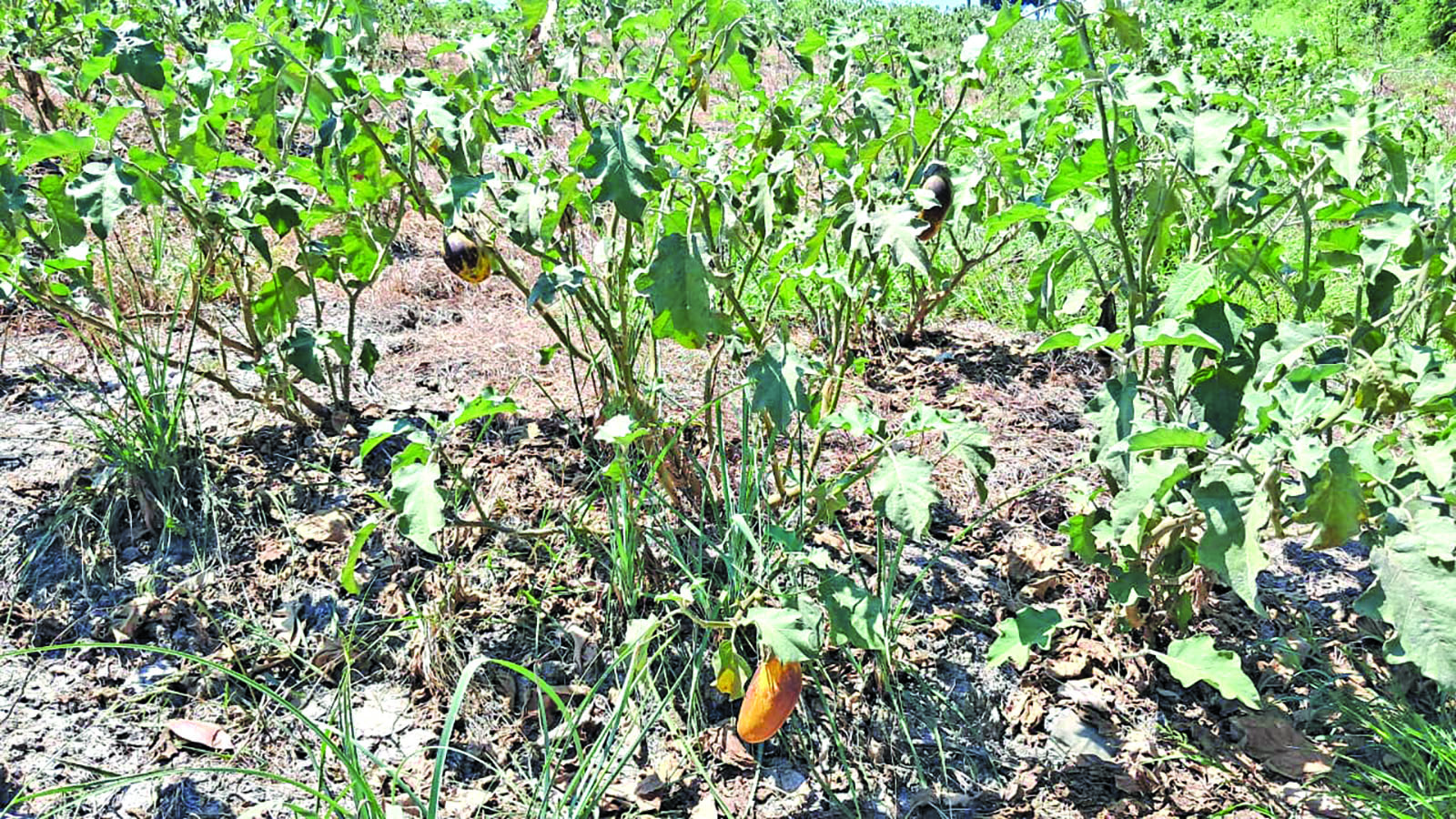
Cracked earth, wilting leaves and blossoms falling prematurely are becoming increasingly visible on farms in Berbice as farmers battle hot, dry conditions and the growing challenge of securing enough freshwater to keep their crops producing. Across the farms visited, the effects were visible beyond the farmers’ accounts. Under the afternoon sun, sections of cultivated land had hardened into rough, broken clumps, while vegetation in other areas had turned brown and brittle. Balanjay plants remained standing and bearing fruit, but several showed drooping and curled leaves against the dry soil. Long irrigation lines stretched across one cultivation, underscoring farmers’ growing dependence on manually getting water to their crops. Nearby trenches also showed the effects of the dry spell, with exposed banks and reduced water levels, while livestock grazed along a canal, another reminder of how important those remaining freshwater supplies could become if the dry weather persists.
For farmers Rickford George, Inderjeet Seeram and Lakeroy Singh, the conditions are translating into practical challenges on their farms, from falling production and greater irrigation demands to additional pumping and fuel costs and concerns about the quality and availability of freshwater. Agricultural Scientist Reynard Ward in an interview with the Guyana Times explained that the dry season is closely linked to changes taking place below earth. During an examination of conditions on farms, Ward pointed to cracked soil and curling leaves as evidence that plants are already experiencing significant water stress. According to Ward, although the rainy season ended only about a month ago, groundwater resources are beginning to decline, reducing the moisture available within the root zone of plants. “The farms are showing the effects; the trees are showing the effects of the dry weather. Leaves are beginning to shrivel, and that is because groundwater levels have dropped significantly. The root zone of the plants is suffering from extreme drying out,” he explained. He pointed to cracks developing in the soil as another indication of the increasingly dry conditions. The scientist warned that crops which successfully made it through the previous rainy period could still suffer losses if adequate moisture is not maintained during fruit development. “As you can see, the ground is cracking, an indication of very dry conditions. While the trees survived the last rain season, fruits around the tree, these fruits require sufficient water and nutrients to become marketable in the months ahead,” Ward said. He said farmers should irrigate their farms to prevent soil moisture from falling below levels required to sustain their plants. If that happens, he warned, crops could reach the stage of permanent wilting and eventually die. But for the farmers trying to follow that advice, getting sufficient water onto their lands is becoming an increasingly important part of their daily operations.
Business
Politics
Need the bigger picture?
Share this article
Comments (0)
Download our mobile app
The portable companion to gazettE. Get notifications, track read articles, and more. The latest news from Trinidad and Tobago, in one place.