Renewal and change as Notting Hill Carnival turns 60
Carnival
September 6, 2026
Share this article
Click to view full size
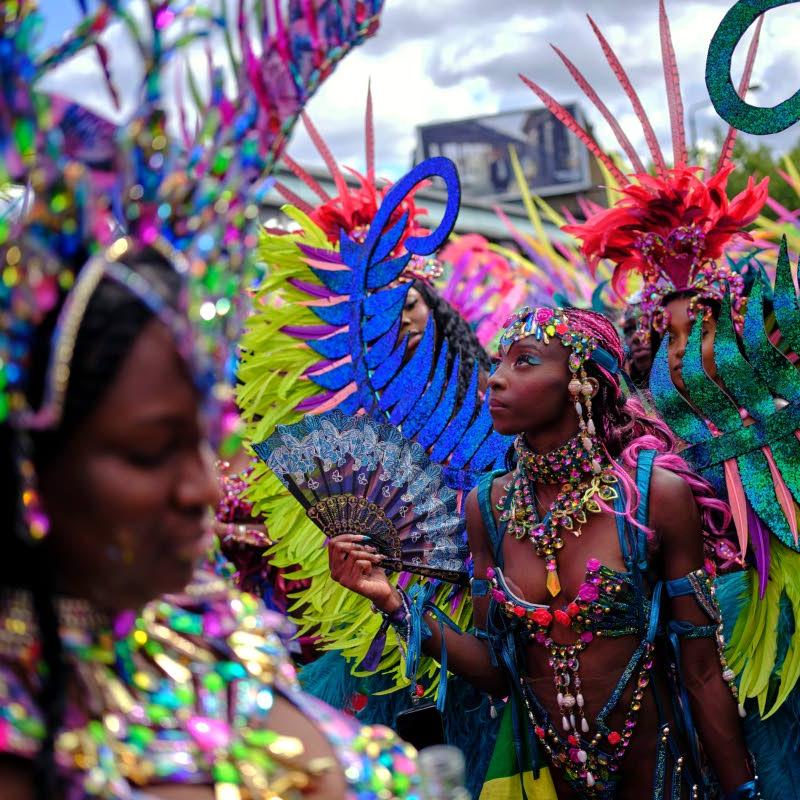
The Notting Hill Carnival in London, the largest street carnival event of its kind in Europe, is now 60 years old. This year’s staging took place over the last weekend, culminating on Monday. I caught up with Dr Claire Holder, a passionate, diehard carnival supporter and London resident who has watched the event bloom and grow over the decades from her front-row seat as chairperson of the event from 1989 to 2002.
What is known today as the Notting Hill Carnival was born from the underbelly of political and racial oppression in the United Kingdom in the 1950s. It emerged from a need for blacks to walk the streets freely without barriers and hindrance, just as they would in any part of the Caribbean. An indoor Carnival-type event was first staged in 1959 as a response to race riots in Notting Hill in 1958. A few years later, in 1966, the festivities hit the streets with a steel band added, and that was instantly a magnet for Caribbean and other revellers of African descent to dress up, jump, prance, whine and shake. And suddenly, a carnival came into being on the streets of Notting Hill.
Ten years later, in 1976, more than 250,000 people showed up for the Notting Hill Carnival. Panic and alarm spread among the authorities. The optics of so many black people converging in one space had not been previously witnessed in the London metropolitan area. The police tried to lock down the celebration with the use of force. Revellers fought back, resulting in the Carnival Riots of 1976. Trying to suppress a Caribbean carnival only creates more hunger for the event, and by 1980, over a million people attended, many of them black.
Carnival
Need the bigger picture?
Share this article
Comments (0)
Download our mobile app
The portable companion to gazettE. Get notifications, track read articles, and more. The latest news from Trinidad and Tobago, in one place.