INVESTIGATIVE REPORT: Guyana is Building a 300 MW Power Plant, But is that sufficient for the nation’s future growth?
Business
Finance
Politics
September 13, 2026
Share this article
Click to view full size
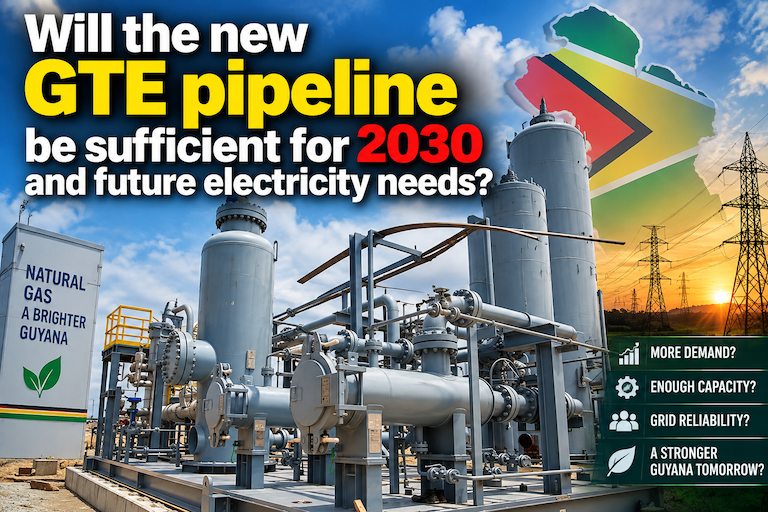
After another massive blackout, government must tell the nation what Guyana’s electricity demand will be in 2030, how much dependable generating capacity it intends to maintain, and whether the grid being built today can support the economy of tomorrow
Another major blackout left large sections of Guyana without electricity for hours on Saturday, once again raising questions that go considerably deeper than the immediate cause of a power outage. Guyana is in the middle of an unprecedented oil-driven economic expansion, thousands of new homes are being built, businesses are expanding, air-conditioning use is rising and government is encouraging industrialisation. Yet the country’s electricity system appears to be operating with an extraordinarily narrow margin between available generation and peak demand.
Guyana Power and Light recently disclosed that peak demand had climbed to approximately 257 megawatts, compared with 221 MW in 2025. At the same time, GPL reported approximately 265.6 MW of available generating capacity, with another 5 MW expected to be added. That means demand has been operating within roughly nine megawatts of available generation. GPL officials have also acknowledged that the system lacks sufficient “spinning reserve”, the generation kept immediately available to respond when a generator, transformer or other major component suddenly trips.
Business
Finance
Politics
Need the bigger picture?
Share this article
Comments (0)
Download our mobile app
The portable companion to gazettE. Get notifications, track read articles, and more. The latest news from Trinidad and Tobago, in one place.