Global services workforce in decline
Business
Finance
July 9, 2026
Share this article
Click to view full size
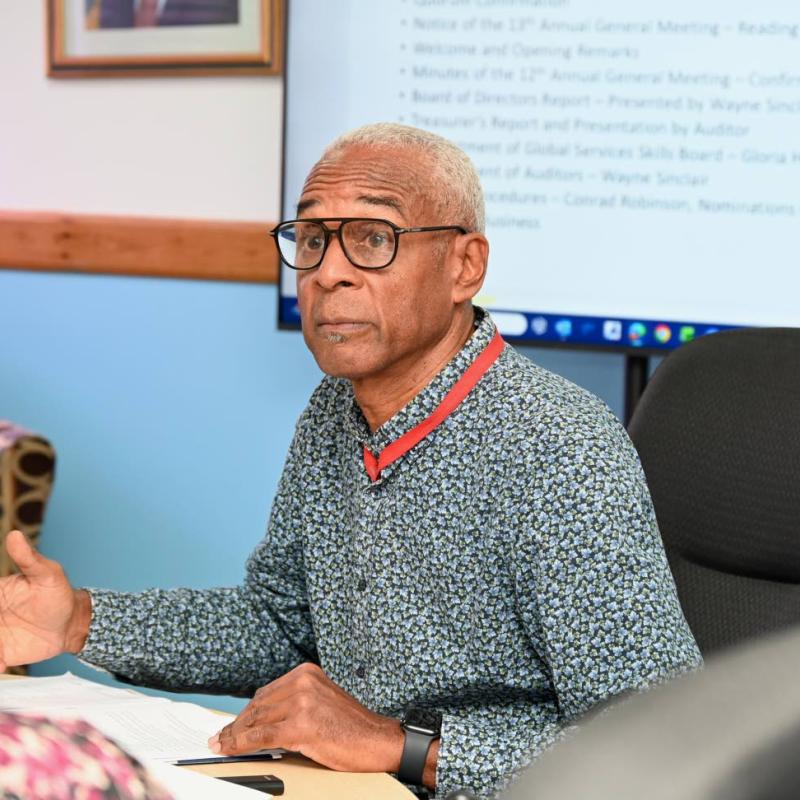
WESTERN BUREAU:Wayne Sinclair, the outgoing president of Jamaica’s global services sector, has disclosed that the sector has lost approximately a third of its workforce since its 2023-24 peak, a factor he has blamed on Hurricane Melissa, labour shortages and rising operating costs.Sinclair, who demits office on August 1, said employment has fallen from a high of between 60,000 and 65,000 workers to approximately 40,000, though the industry remains Jamaica’s second-largest employer and third-largest source of foreign exchange earnings.He was speaking following elections held by the Global Services Association of Jamaica (GSAJ) on Tuesday evening, at which itel founder and Chief Executive Officer Yoni Epstein was elected president.“We were pushing 60,000 to 65,000 heads in the sector. Now we are at about a 33 per cent reduction from 2023-24 to now,” Sinclair said.He noted that the contraction did not primarily reflect the wholesale departure of companies from Jamaica, but rather, the scaling down or loss of individual campaigns operated by service providers.At the industry’s peak, he said, approximately 15 to 20 companies accounted for about 75 per cent of total employment.“Downsizing has really been more of a factor than actually losing companies. We have lost some, but I would not give an exact number,” Sinclair said.He identified Hurricane Melissa as one of the major blows to the industry, noting that it struck when many global services companies would normally have been expanding their workforces to handle increased business during the holiday periods.“It was the worst possible time, because most companies would have been scaling up their Thanksgiving and Christmas preparations,” he said.The disruption left several companies scrambling to maintain operations, with some clients transferring work to service providers in other countries.Sinclair said Jamaica’s tight labour market had also made it increasingly difficult for companies to recruit the large numbers of workers required when new campaigns were secured or existing operations expanded.“We in Jamaica, as you know, are close to full employment. When companies are looking for large-scale numbers to scale up, it has become more difficult to source talent here,” he said.The rising cost of doing business has further weakened Jamaica’s position against competing outsourcing destinations.“The things that used to be of benefit to us before are not so much of a benefit now,” Sinclair said, adding that the country had lost some of its competitiveness.DECLINE NOT PERMANENTDespite the downturn, he rejected the suggestion that the decline was permanent or that the sector would inevitably continue losing jobs.Sinclair said the worldwide global services industry was still expanding, with various studies projecting compound annual growth of between seven and nine per cent through to 2033.“I don’t think we are in a place where that downsizing is permanent or inevitable, and that it is going to continue,” he said.He argued that Jamaica must reposition its value proposition to capture a greater share of the growing international market by adopting technology, improving productivity, upskilling workers, and moving into more sophisticated services.“We, as a sector, have to pivot our value proposition to be able to compete globally,” Sinclair said. “There is still an opportunity to get market share.”A major part of that transition will be the reconvening of the Global Services Skills Council, which was first established in 2019 as a collaboration involving the GSAJ, JAMPRO, HEART/NSTA Trust and international development partners.Sinclair said approximately 2,000 people were trained during the council’s first phase, which concentrated heavily on preparing supervisors, managers and other middle-level professionals.The renewed programme will place greater emphasis on technological skills, artificial intelligence and the capabilities required to move Jamaica further up the global services value chain.The training is expected to prepare Jamaicans for areas such as knowledge process outsourcing, technology-enabled services, and more sophisticated back-office operations.“We are going to be focusing on upskilling from a technological standpoint and on skills that contribute to us going higher up the value chain,” Sinclair said.There will also be a strong focus on helping young people understand how artificial intelligence can be used and adapted in their daily work, rather than viewing the technology solely as a threat to existing employment.The leadership transition places Epstein, who previously served as a founding president of the industry association, at the helm during one of the most challenging periods for Jamaica’s outsourcing sector.Sinclair said the industry must now aggressively promote the improvements being made in technology, training and higher-value services to regain business and strengthen Jamaica’s position in the international marketplace.“We are doing things to pivot as an industry and as a sector,” he said. “We just have to continue to push those improvements and market those improvements as they come on board.”janet.silvera@gleanerjm.com
Business
Finance
Need the bigger picture?
Share this article
Comments (0)
Download our mobile app
The portable companion to gazettE. Get notifications, track read articles, and more. The latest news from Trinidad and Tobago, in one place.