CCJ Judges’ Internal Rift Deepens Scrutiny of Mohamed Extradition Case
Legal
Politics
August 10, 2026
Share this article

Click to view full size
Fresh revelations of internal discord at the Caribbean Court of Justice (CCJ) have intensified political and legal scrutiny in Guyana, after Opposition Leader Azruddin Mohamed pointed to correspondence among judges suggesting deep divisions, concerns over judicial independence, and alleged interference in his extradition case.
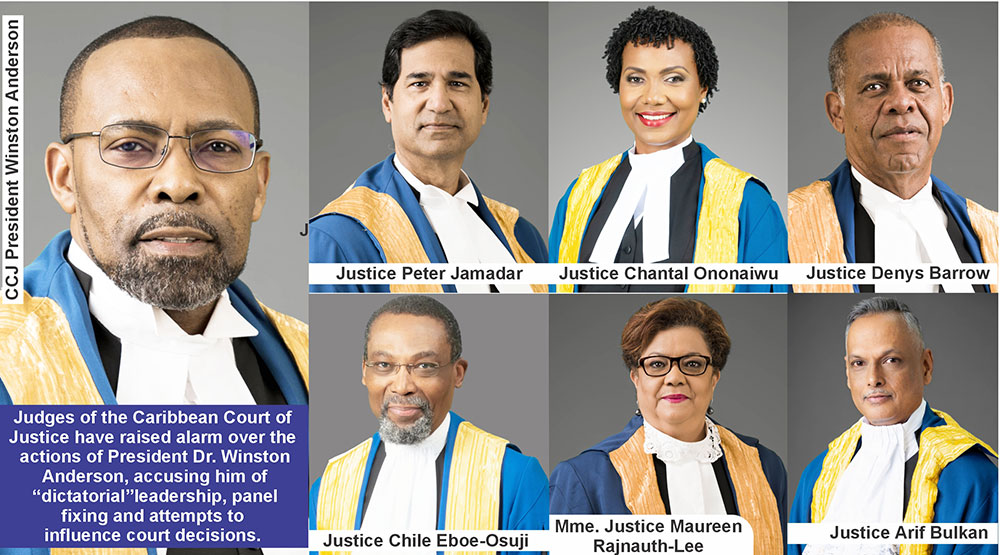
The controversy follows a report in the Trinidad Sunday Express, which exposed serious tensions within the court, indicating that five of its six judges had raised concerns about the leadership of CCJ President Winston Anderson. According to the report, judges accused Anderson of an overly controlling management style and attempting to sway judicial outcomes. The claims also point to alleged manipulation of case panels and describe a strained working environment, with disputes emerging in part over a proposed dress code and the reassignment of a judge from a hearing panel.
In a statement issued August 9, Mohamed said his office was “deeply disturbed” by what he described as “extraordinary revelations” emerging from within the court itself. He emphasized that the concerns were not isolated, but reflected the views of an “overwhelming majority” of the bench, including Justices Chile Eboe-Osuji, Chantal Ononaiwu, Arif Bulkan, Maureen Rajnauth-Lee and Peter Jamadar.
Legal
Politics
Need the bigger picture?
Share this article
Comments (0)
Download our mobile app
The portable companion to gazettE. Get notifications, track read articles, and more. The latest news from Trinidad and Tobago, in one place.