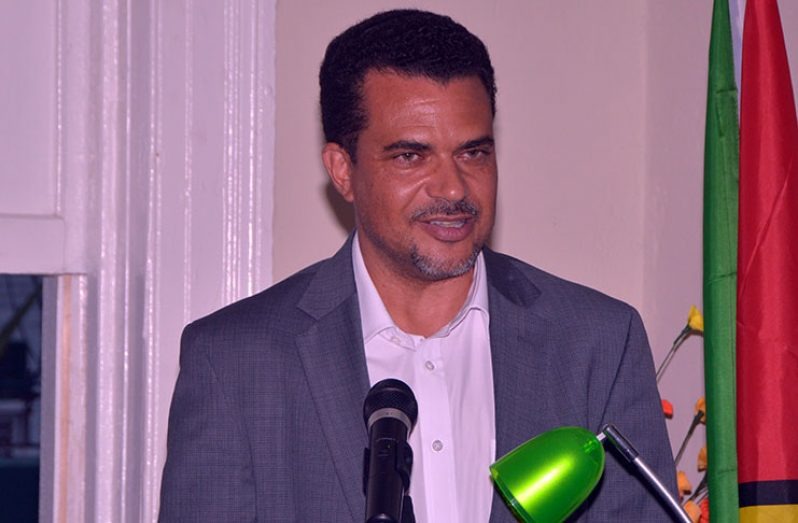
CCJ President Entangled in Guyana’s Politics — Harris
Politics
Legal
August 18, 2026
Share this article

Click to view full size
By Mark DaCosta-On 15 August 2026, in his online column, The Adam Harris Notebook, veteran journalist Adam Harris suggests that the Caribbean Court of Justice (CCJ) is facing increasing scrutiny over its intersection with the domestic political affairs of Guyana. He raises concerns that the court’s leadership, specifically its President, Justice Winston Anderson, risks appearing uncomfortably aligned with the People’s Progressive Party (PPP) administration. Harris argues that this perceived erosion of judicial distance — compounded by governmental secrecy surrounding national tragedies and commissions of inquiry — threatens the foundations of democracy and the rule of law in Guyana.
The anguish of the MV Barima catastrophe continues to raise emotions across our nation, yet the administration’s response has done little to reduce public grief. Across the country, citizens have confronted the government during its outreach programmes, invoking the ferry disaster that claimed scores of lives. Protesters view the much-hailed model village initiative as a governmental diversion from more serious matters.
As parliamentarian Juretha Fernandes observes, “the populace judges administrations by their deeds not promises,” and many fear these model communities may prove another hollow fantasy. Harris, ever the seasoned analyst, notes that after initial statements from Prime Minister Brigadier Mark Phillips and Minister Juan Edghill, an ominous hush has fallen upon the administration — a quiet as deep as the silence observed in the National Assembly when legislators voted to release additional public funds to the executive.
Politics
Legal
Need the bigger picture?
Share this article
Comments (0)
Download our mobile app
The portable companion to gazettE. Get notifications, track read articles, and more. The latest news from Trinidad and Tobago, in one place.