The Village Movement: How Freed Africans Bought Their Freedom Twice
Politics
August 6, 2026
Share this article
Click to view full size
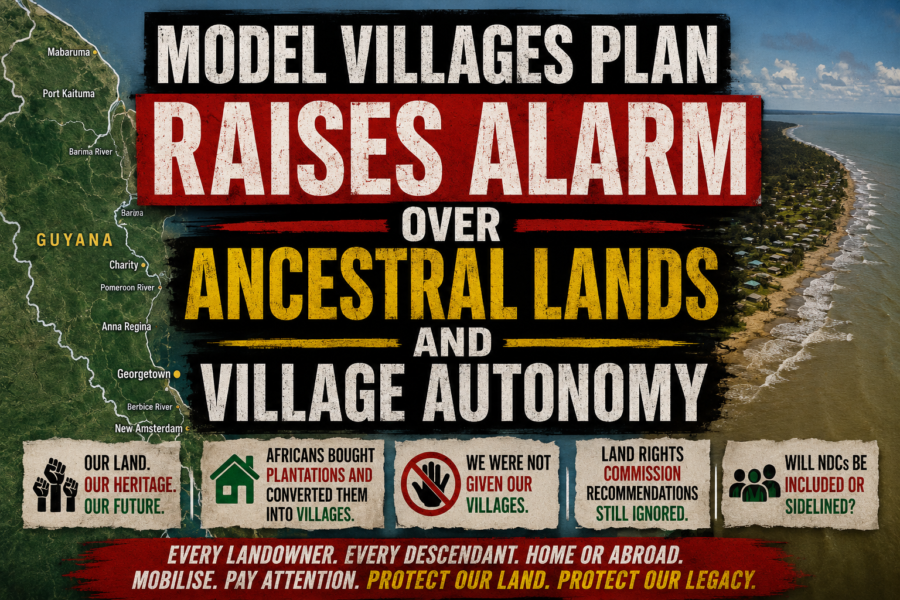
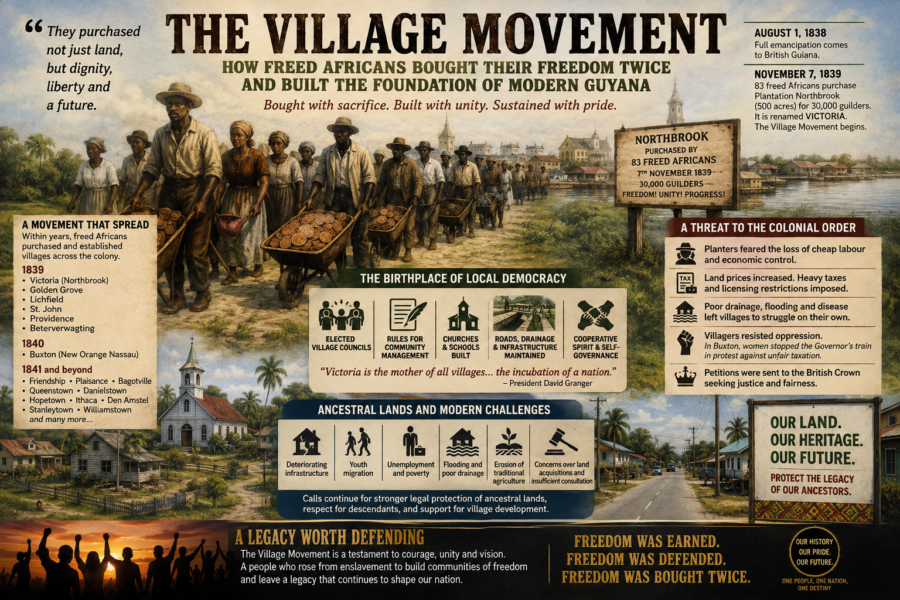
They had endured centuries of enslavement, survived the brutality of the plantation system and emerged from emancipation with little more than hope, determination and each other. Yet in one of the most remarkable acts of collective self-liberation in Caribbean history, freed Africans pooled their hard-earned savings to purchase the plantations on which they had once been enslaved, establishing independent villages that became the cradle of local democracy and one of the enduring foundations of modern Guyana. The Village Movement was more than a quest for land—it was a declaration that freedom, dignity and self-determination would never again be surrendered.
It was, historians have observed, a people buying not simply land, but dignity, liberty and a future.
When full emancipation took effect on August 1, 1838, thousands of Africans left the plantations determined never again to live under the control of the plantocracy. Their freedom had not come easily. Four years earlier, on August 1, 1834, slavery had been legally abolished throughout the British Empire, but instead of immediate liberty, the British introduced the Apprenticeship (Amelioration) System, compelling formerly enslaved Africans to continue labouring for their former enslavers without wages for a prescribed number of hours each week.
Politics
Need the bigger picture?
Share this article
Comments (0)
Download our mobile app
The portable companion to gazettE. Get notifications, track read articles, and more. The latest news from Trinidad and Tobago, in one place.