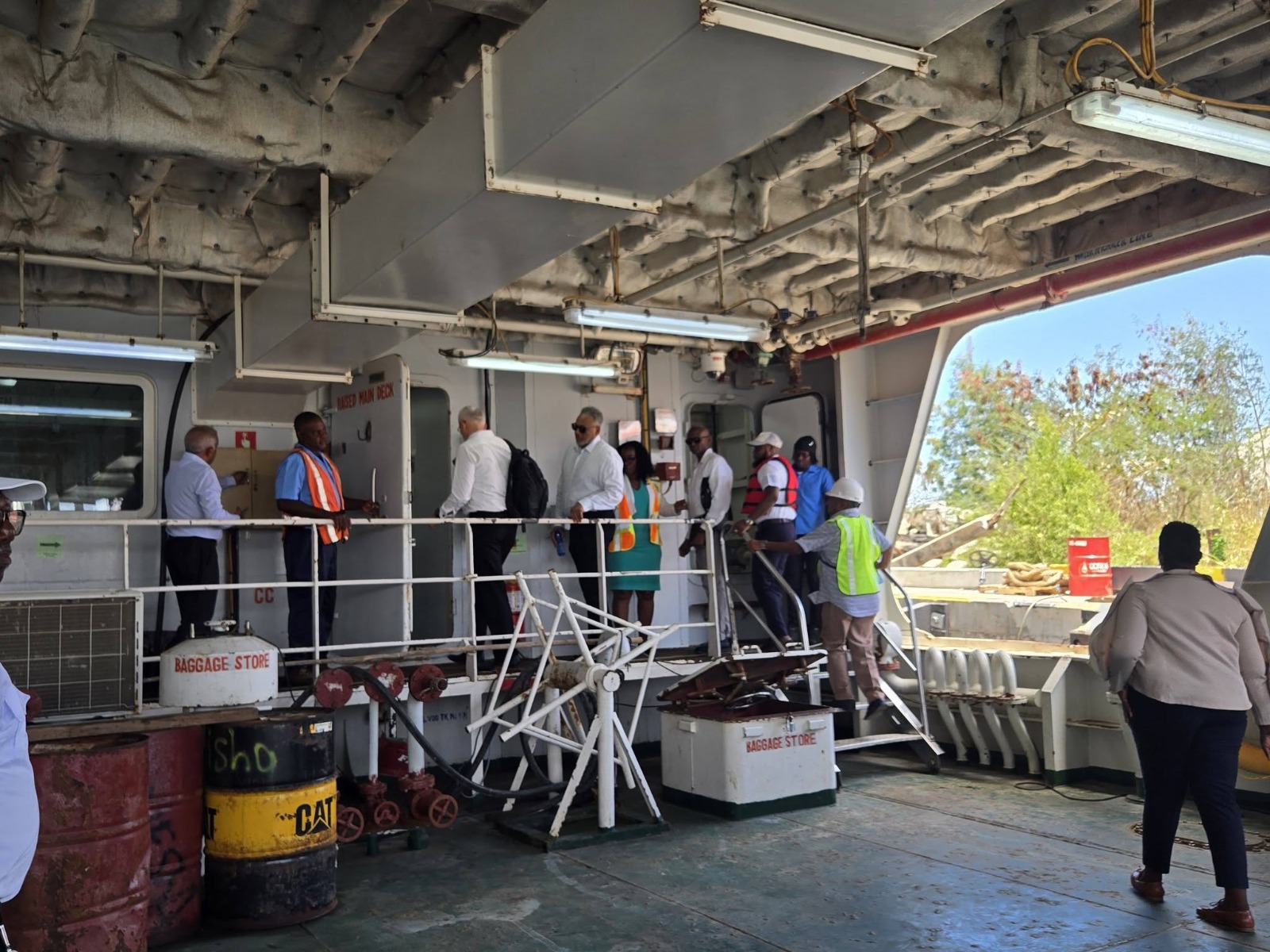
MV Barima cargo tonnage calculated from cash revenue rather than actual weight, inquiry hears
Legal
November 26, 2026
Share this article
Click to view full size
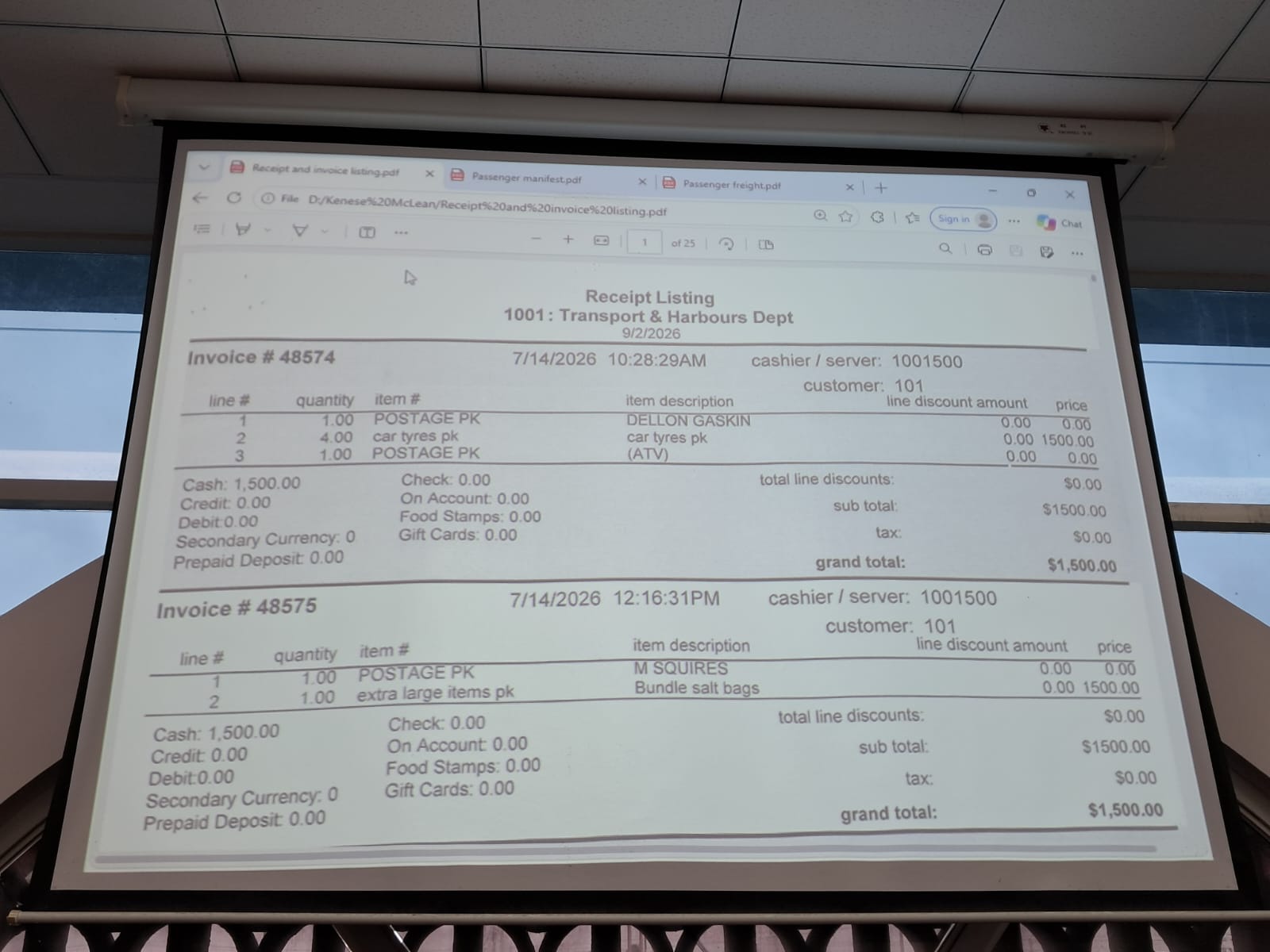
(Kaieteur News) – Cargo tonnage for the MV Barima is calculated manually by dividing accumulated cash revenue by a flat $6,000 goods tonnage rate rather than weighing any freight, while staff operate across disconnected manual books, unexported software price lists, and unverified passenger manifests, according to testimony from Transport and Harbour Department clerk three, Kenese McClean. Appearing before the Commission of Inquiry into the July 18, 2026 sinking of the MV Barima, McClean, who has worked at the agency since 2007 serving for more than 15 years across goods and passenger cashier roles, showed how figures are generated and where record-keeping breaks down.
Questioned on how the department arrived at a reported manifest figure of 268 tons of cargo for the July 18 voyage to Port Kaituma and Kumako, McClean confirmed she helped THD general manager, Yulander Hughes compile the figures and explained that tonnage has no connection to actual item weights. “We normally, from what I was taught, we normally calculate on the revenue. The revenue that we got. That’s how we normally calculate the weight,” she testified, noting that if accumulated goods revenue totals around $800,000 or more, dividing by $6,000 produces the goods tonnage figure. She agreed with commissioners that the calculation is arbitrary and does not reflect true physical weight, adding that passenger weight is excluded altogether. “We don’t calculate tonnage on passengers because they’re probably just, I would say human,” she said, noting that she prepares the rundown manually on electronic spreadsheets and paper records archived at the goods wharf, and had never seen Barima reach 300 tons.




McClean testified that the point-of-sale software, which she has used for about five years since its inception, contains no weight classifications at all, charging fixed programmed rates such as $250 for a 20-pound gas cylinder, $500 for an intermediate cylinder, $1,000 for a 100-pound cylinder, $375 for a sack of cement, $15,000 for a 40-sack sling of cement, $200 per sheet of plywood, $1,500 for four car tires or a small empty freezer, and $2,500 for a motorbike. She said she works strictly as an end user without a separate price list or authority to export or alter database records, identifying external service provider Nigel Spencer as the programmer who installed the system and is called when glitches occur. Because items programmed for one port do not always appear for another, such as a two-burner stove programmed for Kumaka but missing for Port Kaituma, cashiers consult supervisors and log unregistered goods under miscellaneous or small-item entries at $150, $300, or $750, or under a B-class fruit entry around $270, while noting that “everyone here captures a record in one’s own style.”
Read the full story
Continues on Kaieteur News
Legal
Share
Need the bigger picture?
Comments (0)
Download our mobile app
The portable companion to gazettE. Get notifications, track read articles, and more. The latest news from Trinidad and Tobago, in one place.