Psychiatrist seeing more smart device addicts
Health
July 29, 2026
Share this article

Click to view full size
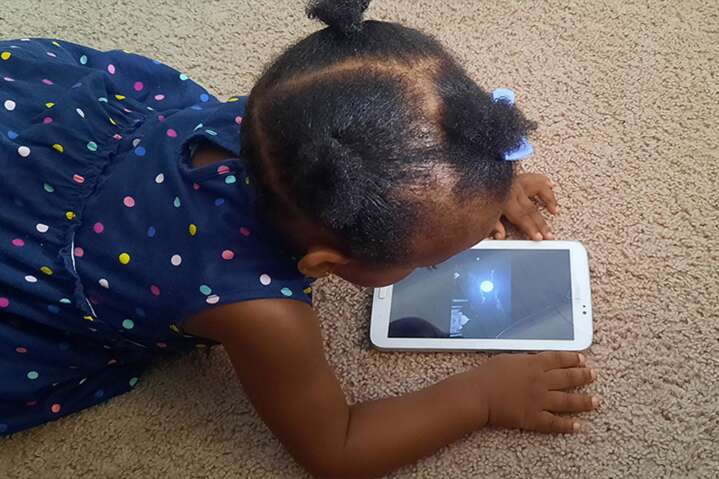
A leading child and adolescent psychiatrist says children are becoming increasingly anxious, isolated and addicted because of excessive social media use. Speaking on Tuesday at the Ministry of Health & Wellness’ press conference to release the findings of the National Study on Social Media Use and the Protection of Children, Dr Ganesh Shetty warned that many youngsters are becoming disconnected from their families and communities while forming unhealthy attachments to their devices. He explained that the problem often begins in infancy, with children becoming attached to screens instead of interacting with the people around them. “And even at this age [they] can get addicted to the machine. You can see that by the amount of noise a child will make when you take the tablet away,” he said. According to Shetty, the cycle continues throughout childhood as youngsters seek entertainment online after spending long hours in school and completing homework. “You come home and you must finish it or you’ll be in trouble the next day. So you want to have some fun? You go to your tablet or laptop. These algorithms are created by behavioural specialists and they drag you into something more interesting, something more wonderful, so that it will suck you into addiction,” he said. He said the effects are becoming increasingly evident in his clinical practice as he is seeing more tablet addicts than weed addicts. He said some teenagers have become so detached from reality that they believe school is no longer necessary. “They tell their mum, ‘I don’t need to go to school because I want to become a YouTuber’. What mom’s supposed to do? She calls police and police say they have done nothing illegal, so we can’t do anything.” Shetty said adolescence is one of the most vulnerable stages of development because the areas of the brain responsible for judgement and self-control are still maturing. He warned that girls between 11 and 13 and boys between 14 and 15 are particularly susceptible to harmful online content, including pornography. Shetty also cautioned that repeated exposure to violent content online can desensitise children to human suffering. “Somebody gets hit in your school, you’re interested in taking a video of it and putting it online so it can go viral, not going and assisting that person,” he said. Cyberbullying, he added, has become another major concern because abuse can originate anywhere in the world and follow children into the classroom. “It can affect your energy, affect your focus, affect your memory, affect your school grades, affect what you want to become,” he said. Shetty said many children become anxious about returning to school after being targeted online. “Those who are alienated, teased, go home and feel so bad about themselves, they cut themselves. And not to mention those who try to kill themselves.” He urged parents to protect children’s sleep by creating screen-free zones, especially in bedrooms. “I never met a teenager who sleeps nine hours [or] say eight hours, maybe six, not three hours. You can’t sleep at 3 a.m. because you’ve gone through all your social media and expect to get up at 6 a.m. and go to school and be focused,” he said.
Health
Need the bigger picture?
Share this article
Comments (0)
Download our mobile app
The portable companion to gazettE. Get notifications, track read articles, and more. The latest news from Trinidad and Tobago, in one place.