AI for due diligence — how to read a 200-page document before you sign it
Business
Finance
August 1, 2026
Share this article
Click to view full size
Consider a Jamaican business that gets the chance to buy a smaller competitor. The price is fair, the fit is good, and the seller’s attorney sends over the paperwork: a sale agreement, the premises lease, the staff contracts, two loan facility letters, and an aged receivables listing. Together it runs past 300 pages, the exclusivity window is three weeks, and every one of those pages was drafted by someone whose job was to protect the other side. The traditional options are to pay an attorney to read all of it, which is expensive, or to skim it yourself and hope, which is how people end up owning a lease escalation clause they never saw.
Due diligence sounds like something that happens in glass towers, but every business signs its way into long documents: the bank facility letter, the commercial lease renewal, the franchise agreement, the equipment finance contract, the big supplier agreement with the small print about minimum volumes. This is the job AI has become excellent at — patient, tireless reading of documents far too long for a busy owner to absorb — and this week the column shows how to use it without fooling yourself about what it can and cannot do.
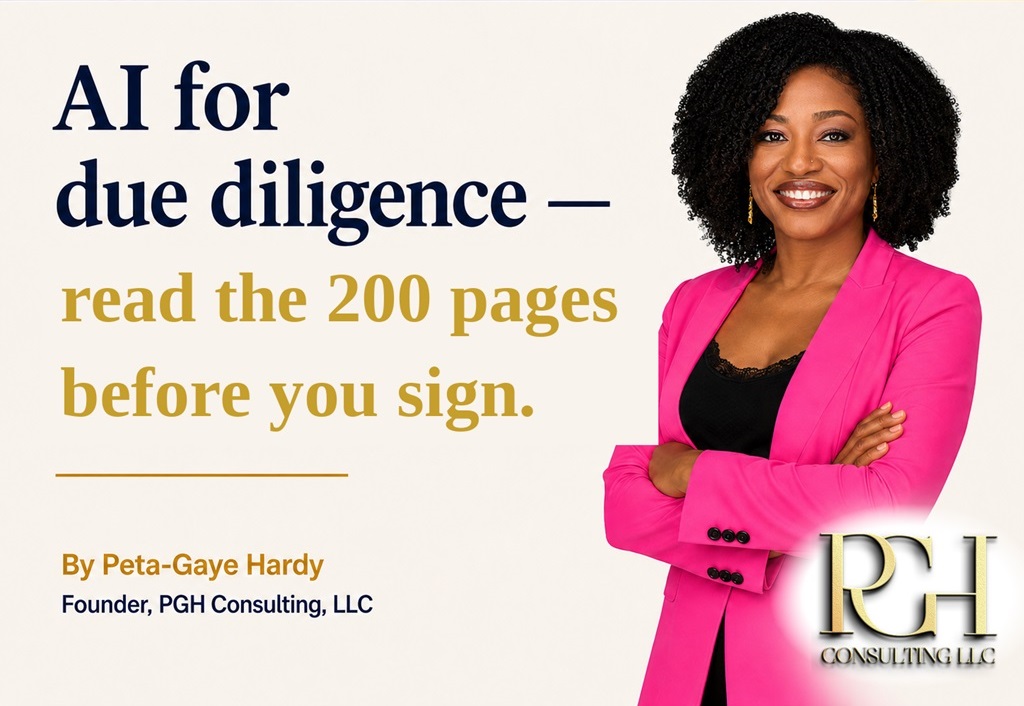
The stack behind a business purchase — sale agreement, lease, staff contracts, loan letters,receivables — and the three-step workflow that gets it read. (Branded graphic by PGH Consulting, LLC)
Business
Finance
Need the bigger picture?
Share this article
Comments (0)
Download our mobile app
The portable companion to gazettE. Get notifications, track read articles, and more. The latest news from Trinidad and Tobago, in one place.