Blooming Success: From First Plant to First Fruit
Business
August 13, 2026
Share this article
Click to view full size
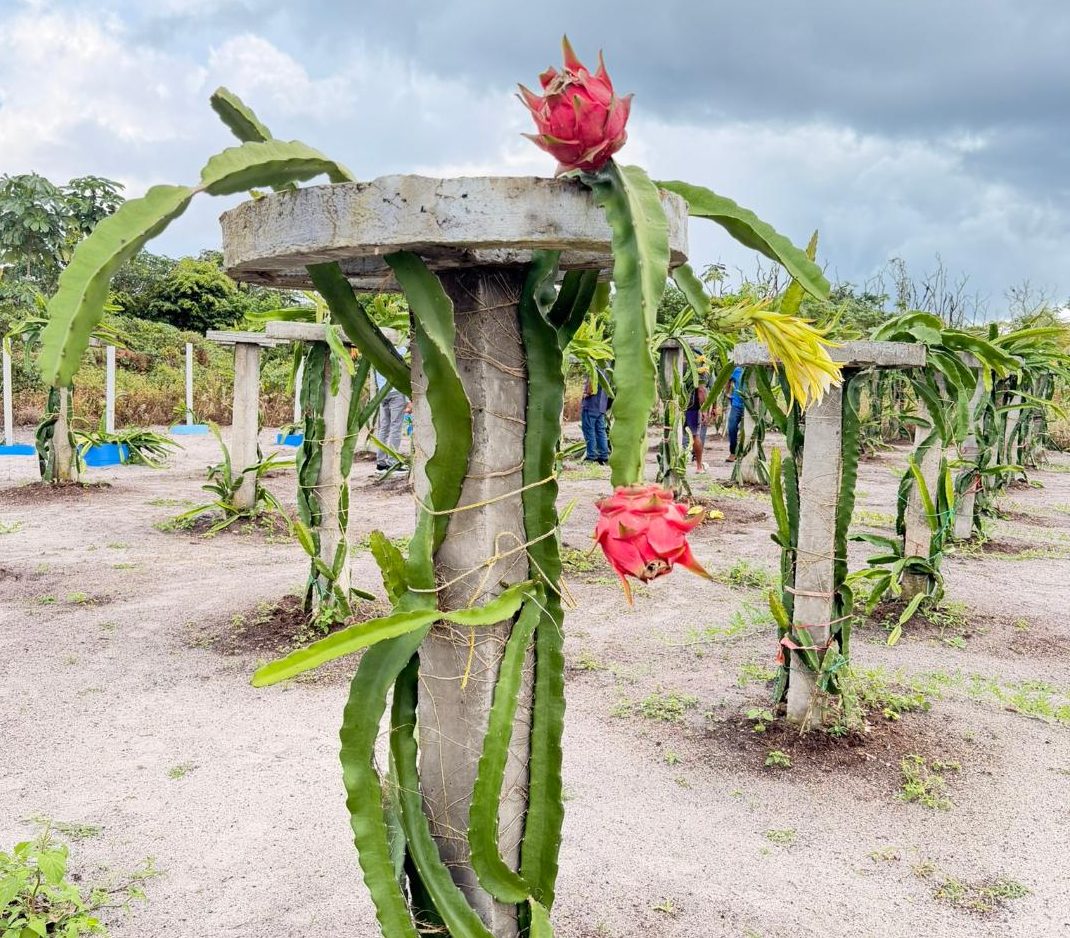
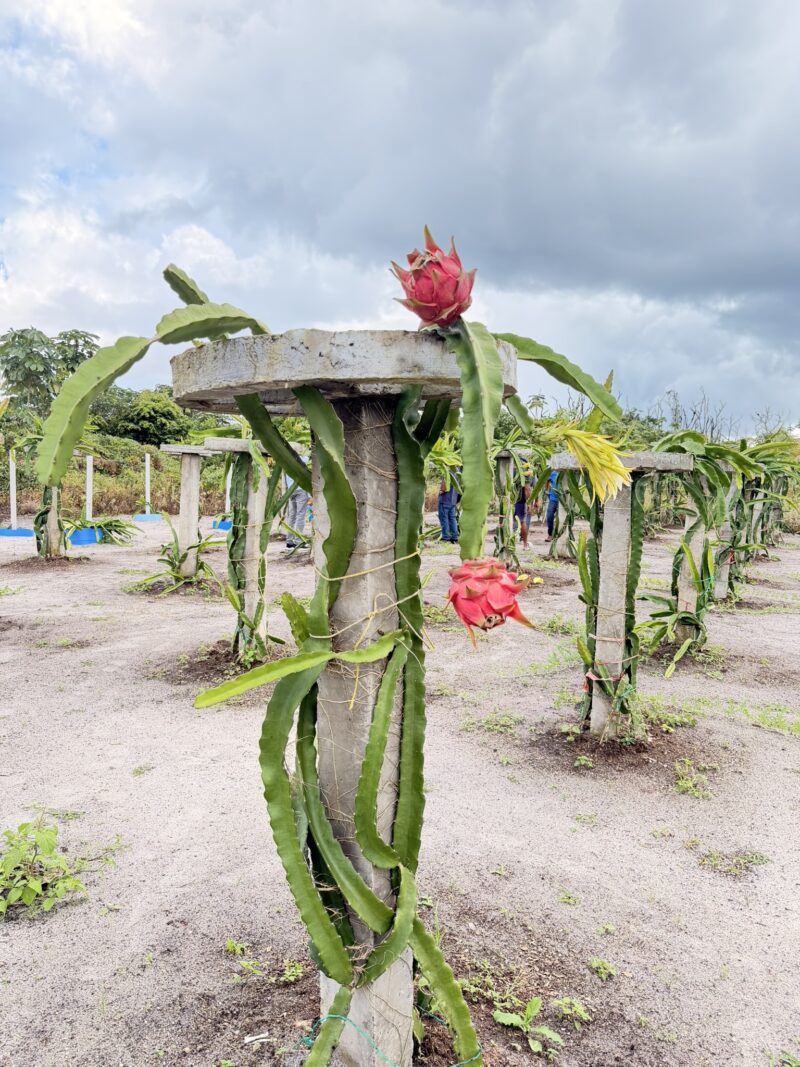
Nine months ago, growing dragon fruit was an unfamiliar idea for many farmers along the Linden–Soesdyke Highway. Today, rows of climbing cactus plants are rewarding their patience with spectacular white blossoms and fruits —the first visible sign that this new agricultural opportunity is succeeding.
“This is my first time planting dragon fruit, and I am surprised by how quickly it has reached production. The commercial potential is limitless. I am already expanding my farm, and, with Mr Van Son’s ongoing guidance, I have learnt how to identify and manage diseases. I was willing to learn because I saw an opportunity to create something better for my family,” said Mr. William Adams.
For the farmers participating in the Food and Agriculture Organization of the United Nations (FAO) dragon fruit pilot initiative, these first blooms represent far more than fruit. They symbolise perseverance and teamwork for a more resilient future. The initiative was launched under the Sustainable Land Development and Management (SLDM) project, implemented by the Guyana Lands and Surveys Commission (GLSC) with support from the National Agricultural Research and Extension Institute (NAREI), and funded by the Guyana REDD+ Investment Fund (GRIF).
Business
Need the bigger picture?
Share this article
Comments (0)
Download our mobile app
The portable companion to gazettE. Get notifications, track read articles, and more. The latest news from Trinidad and Tobago, in one place.