Coaches support JPL hydration breaks but …
Sports
Health
Business
July 20, 2026
Share this article

Click to view full size
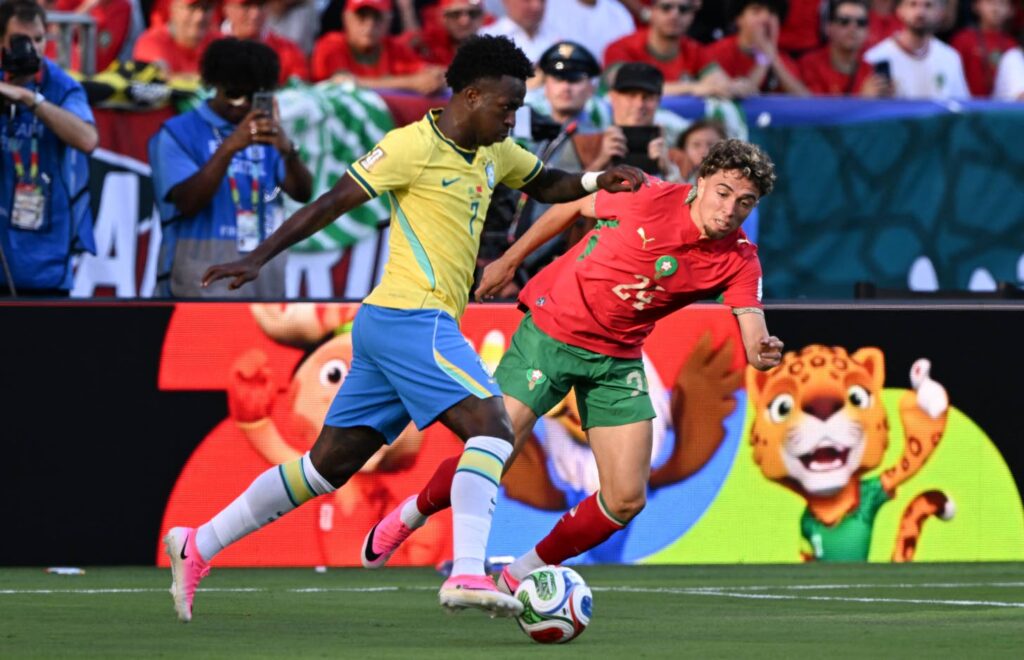
Not everyone is in agreement that hydration breaks, introduced at this year’s World Cup, should be immediately included in the Jamaica Premier League (JPL) in the same way it existed in the showpiece event, as has been proposed by Professional Football Jamaica Limited (PFJL) CEO Owen Hill in a Gleaner article last week.Hill has argued that hydration breaks can be very beneficial for health and commercial reasons, pointing out that it can help players in our climatic conditions, while providing opportunities for more commercial opportunities.While most JPL stakeholders believe hydration breaks could be a valuable addition to the league in terms of commercial value, some coaches are wary that such a break in the middle of a game will also provide coaches with tactical breaks; meanwhile Waterhouse coach Donovan Duckie believes restrictions on coaching during the rehydration break should be applied.“You are getting coaching in real time, where you can make more adjustments while the game is going on. So it benefits the coach and the team that is losing more.“If I am winning the game, I don’t want you to get a water break; but if I am losing the game, I want a water break, so I can get some coaching points in,” he reasoned.He said it is up to world governing body FIFA to address the issue of coaching during the hydration break by banning coaching during the intermission in play.“I was wondering when FIFA are going to step in and say no coaching is allowed. Why didn’t FIFA say no coaching is allowed inside the water break (at the World Cup)?“FIFA should have said no coaching, and coaches are not allowed to leave their bench when the hydration is taking place; they could have done that.”He thinks hydration breaks should benefit the players, who, especially in our type of climate, need it.“In Jamaica, based on our climatic factor. I would say it is 100 per cent welcome. Because of our weather players quickly dehydrate, but it also benefits the coaches to get in some coaching points, and it will benefit sponsors.“I am a supporter of the hydration break, without coaching points, because once coaching is allowed during that period it benefits [losing] coaches.“It’s no different from half-time going into a dressing room and they get hydrated, plus coaching points.“If you are allowing hydration breaks plus coaching points, you are allowing three half- times, but otherwise I am 100 per cent in support of it.”Former Tivoli and Arnett Gardens coach Jerome Waite also believes it gives an advantage to the team losing and takes away from the team with the momentum.“We are in a tropical environment in our region, so it will be something that is good for the players with the time getting hotter and hotter. “It also has its disadvantages, where a coach can get an opportunity to speak to his team on the tactical aspects as it relates to the opponents, and that can make a difference. So it is something good, and it is something I can say is bad,” he commented.“It can be positive for some, and it can be negative for others. It can break everything for a team going forward, and that can give the opponents an opportunity to regroup. So it has positives and negatives.”Harbour View General Manager Clyde Jureidini agrees that hydration breaks provide coaching opportunities, but he believes the opportunity is open to both teams and that for teams with the advantage, their coaches must find ways of keeping their momentum going on resumption.“It’s a good innovation. It will help with a couple things that have changed. One is, and we have seen it at this current World Cup, it increases the opportunity for the technical team to reassess, re-strategise and re-implement. “It means you have more tactical nuances in three breaks, in addition to the lead-up to the match preparation.“It suggests you would get better football more often in each quarter of the game. It then requires players to respond differently with different skill sets, different tactics, different techniques and combinations. So, technically and tactically, I think that’s good,” he reasoned.He continued that despite the arguments for the team in the ascendancy, he insists it’s an opportunity presented to both teams.“It opens both sides. There is no reason on earth that if you are dominating before the break because your momentum is lost, it doesn’t mean you can’t re-strategise. “It opens up for you to do that or continue doing that, or change your tactic in order to get more dominance in a different way, but it opens the gate for everybody,” he continued.“The same advantage the opponents have is the same advantage you have. You already know what is working and you need to find other ways to keep that working. It might suit you as well to re-strategise for the next window, if you see it fit.“However, it pushes both ways. It depends on what you decide, what you discuss, and what you do.“You become more comfortable when you have a position of dominance. You believe you have to do the same things, but probably you need to think more about what more, or what less, you need to do at that time.“So as the leader at that point, you haven’t used that break technically and tactically as well as the opponent; that is what it is suggesting.”Nevertheless, all three believe hydration breaks will provide another avenue for commercialisation, which could bring much-needed revenue into the league.“For the commercialisation, it is a good initiative that will help to generate more capacity for small to medium and big-sized sponsors to get involved in the game, and create aspects that the commercialisation funding the clubs, the league and football fraternity needs.“So it is a win-win situation for me, and I think it could be experimented with and implemented,” Jureidini added.livingston.scott@gleanerjm.com
Sports
Health
Business
Need the bigger picture?
Share this article
Comments (0)
Download our mobile app
The portable companion to gazettE. Get notifications, track read articles, and more. The latest news from Trinidad and Tobago, in one place.