Kamla’s CCJ fears echoed from within the court
Politics
Legal
August 10, 2026
Share this article
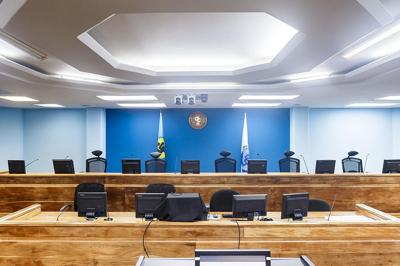
Click to view full size
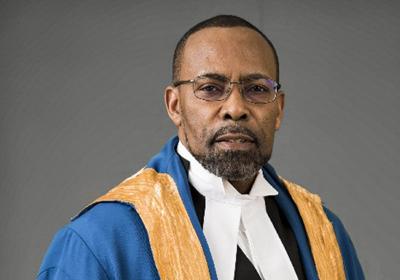
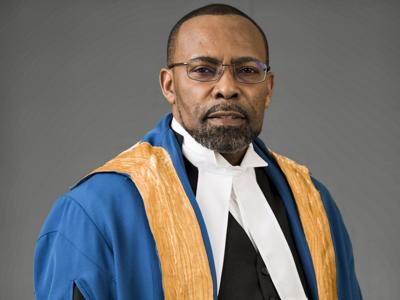
Justice Arif Bulkan, one of the presiding judges of the Caribbean Court of Justice (CCJ), said the very concerns that led Prime Minister Kamla Persad-Bissessar to distrust the court centered on the risk of a single judge imposing a legal position contrary to that of the majority. He said the appellate process is designed to guard against such bias and preserve the integrity of the institution.
The Guyanese-born judge was responding to a chain of emails exchanged among his fellow CCJ judges in June 2026 amid escalating complaints against Justice Anderson. The allegations ranged from claims that he had unilaterally imposed a judicial dress code to accusations of "panel fixing" and attempts to influence the outcome of cases. A majority of the court's judges also accused Anderson of running the regional court in an "authoritarian" and "dictatorial" manner.
Justice Bulkan, referring to a drafted judicial dress code by Justice Anderson, raised other questions pertinent to his leadership style. "...the content of our judgments is very clearly a matter within our sole discretion as independent office holders. What is more, the appellate process by its very definition requires a panel of more than one judge to consider an appeal and to independently come to a decision—if a President(sic) could overrule a majority there is no need for a panel. Viewed from another angle, the benefits of multiple judges sitting in review are to ensure rigour,breadth of knowledge and experience, and safeguards from bias. If one could simply say, I am doing X, even though 4 or 5 feel otherwise, the safeguard of the appellate process vanishes."
Politics
Legal
Need the bigger picture?
Share this article
Comments (0)
Download our mobile app
The portable companion to gazettE. Get notifications, track read articles, and more. The latest news from Trinidad and Tobago, in one place.