Jonathan Este | America at 250: still a ‘democratic experiment’
Politics
July 6, 2026
Share this article

Click to view full size
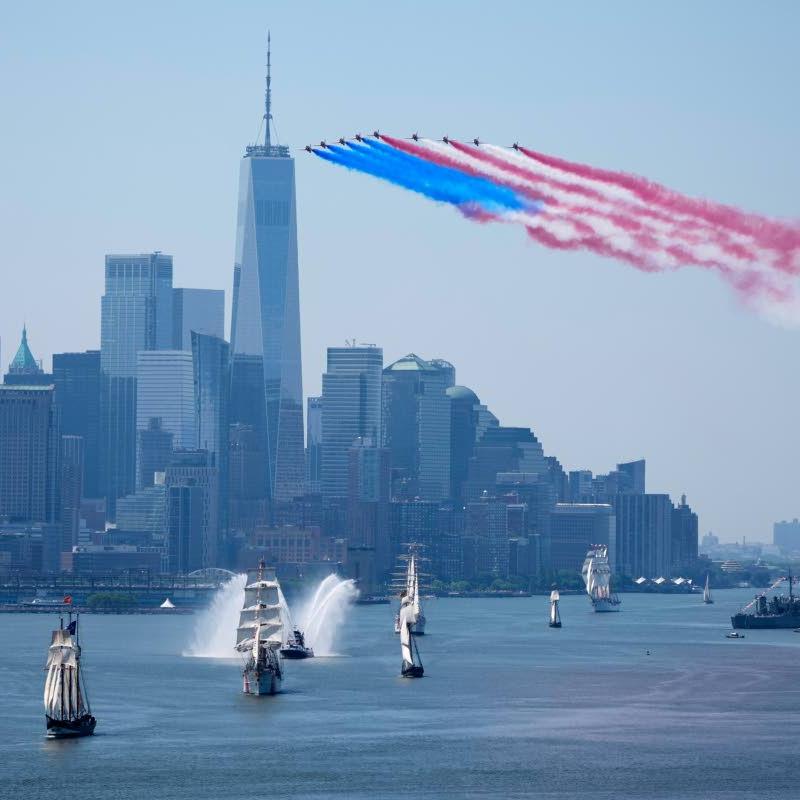
Last weekend marked 250 years since the Second Continental Congress, representing the 13 American colonies, assembled in Philadelphia to sign the Declaration of Independence. The country had already been at war for more than a year and would continue its armed struggle against Britain for another seven. But on July 4, 1776, the United States of America was born.The ideas that found expression in the Declaration were not new. Tensions between the British crown and its American colonies had been percolating for years. And the philosophical ideas behind America’s revolutionary fervour were also finding expression in Europe, particularly in France and Britain.As Tom Cutterham, a professor of American history at the University of Birmingham, writes, the sort of ideas that inspired America’s revolutionary thinkers had for some years “been closely tied to questions about corruption, oligarchy and executive tyranny in Britain itself”. He points to the likes of Thomas Paine, John Wilkes, Granville Sharp and Catharine Macaulay, who were writing passionate arguments against British despotism.Macaulay argued that the authority of a monarch rests on a contract between ruler and ruled which, if broken by the monarch, is void. It’s an idea, which is said to have inspired Benjamin Franklin’s contribution to the Declaration of Independence. Cutterham tells the stories of the Britons who supported America’s struggle to throw off its colonial masters.The weekend’s celebration of America’s 250th birthday came at a time of deep division in the US. There were even two separate organisations planning rival events. One – America250 – was set up in 2016 by the US congress and signed into law by Barack Obama. The other – Freedom250 – was launched in 2025 by the current president, Donald Trump. The former was specifically established as a bipartisan committee, while it’s hard to see that latter as anything, but a partisan expression of the president’s vision of America.MIRRORS DEBATEThe situation mirrors the debate raging in the US over American history itself, writes Andrea Loux Jarman, an expert in US constitutional law at Bournemouth University. As Jarman notes, early on in Trump’s second presidency, he issued an executive order, Restoring Truth and Sanity to American History, which targeted what the administration likes to call “woke history”.Part of this has involved removing or rewriting information panels in museums which, the order says “inappropriately disparage Americans past or living (including persons living in colonial times)”. Instead, educational information should “focus on the greatness of the achievements and progress of the American people”.Needless to say information in museums and galleries about the horrors of slavery are among the “woke history” on the Trump administration’s target list. It’s a row which is likely to find its way to the Supreme Court before it can be resolved, writes Jarman.With this ideological struggle in mind, it’s vital that the celebrations do not overlook the huge contribution that African Americans have made to their country’s history, writes Jenny Woodley, a specialist in American history at Nottingham Trent University.Even as the founding fathers were honing the ideas that would overthrow British rule, in 1772 an enslaved woman named Phillis Wheatley published a poem that compared her enslavement to “the iron chain, Which wanton Tyranny with lawless hand Had made, and with it meant ’enslave the land’”.PROMISSORY NOTENearly two centuries later, in his I Have a Dream speech, Martin Luther King Jr called the Declaration of Independence a “promissory note” that guaranteed all people their inalienable rights. He said the bank of justice was not bankrupt and it was time for all Americans to “cash this check”.But as the US celebrates 250 years since this promissory note was issued, “the ‘bank of justice’ is looking increasingly short of funds”, writes Woodley. She says it’s vital this celebration is one that is shared by all Americans, or – to borrow from the US constitution: “We the people”.It’s commonplace to read of American democracy as “an experiment” or a “work in progress”. For many of us, just how fragile that work remains was illustrated by the events of January 6, 2021, when a mob stormed the US capital in an attempt to prevent Congress from ratifying the results of the 2020 election, which Trump still insists was fraudulently stolen by his opponents.Happily, democracy prevailed that day. But over its 250 years there have a number of occasions when the US has been deeply divided and democracy itself was thought to be imperilled. Historian Sarah Trott, of York St John University, recounts five of the most dangerous moments for the American experiment.Jonathan Este is senior international affairs editor, associate editor at The Conversation. This newsletter was first published in The Conversation UK’s World Affairs Briefing email. This article is republished from The Conversation under a Creative Commons licence. Read the original article here: https://theconversation.com/america-at-250-still-a-democratic-experiment-286695
Politics
Need the bigger picture?
Share this article
Comments (0)
Download our mobile app
The portable companion to gazettE. Get notifications, track read articles, and more. The latest news from Trinidad and Tobago, in one place.