Raquel Seville and Keisha Bailey | Scotia's Exit and the $54-Billion Question
Business
Finance
June 27, 2026
Share this article

Click to view full size
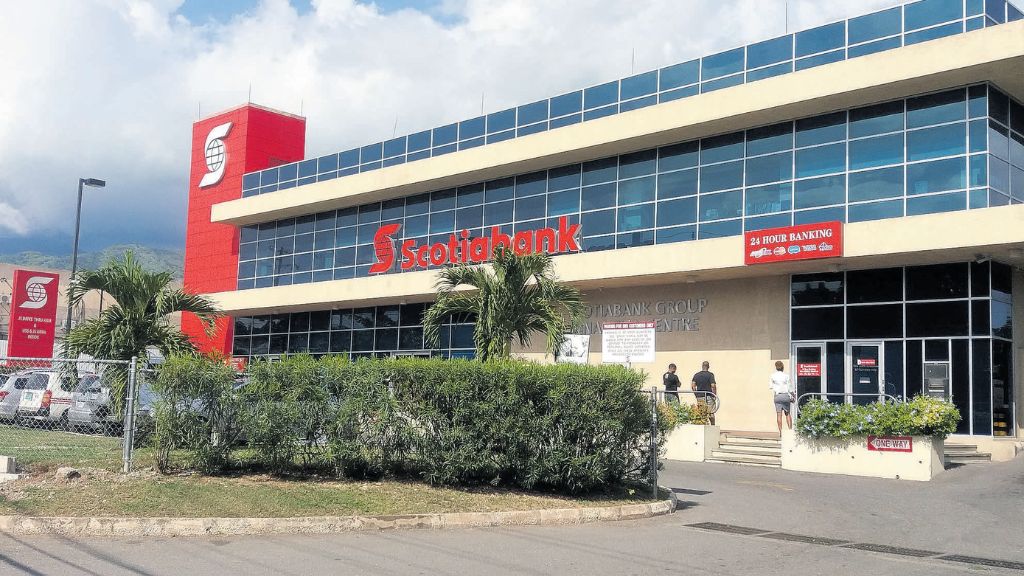
Scotia Group Jamaica is leaving the Jamaica Stock Exchange while it is winning with record profits. The profit line is not the story. The story is capital, float, and where roughly $54 billion will look for a home once one of the largest financial stocks on the Jamaica Stock Exchange is gone.
The most revealing corporate decisions are taken from a position of strength, because they show what an owner truly values. Scotia Group Jamaica is not leaving the Jamaica Stock Exchange (JSE) because it is struggling. It is leaving because it is feasible to do so. The bank earned $19.90 billion attributable to stockholders in the year to October 2025 — $6.40 per stock unit — sits on total assets of $773.8 billion and carries a banking capital adequacy ratio of 15.23 per cent compared to a 10 per cent regulatory floor. Second-quarter profit this year rose to roughly $6 billion from $5 billion a year earlier. A company in that condition does not retreat. It optimises and the optimisation it has chosen is to take itself private.
This is not a distress story to be mourned or a confidence story to be celebrated; it is a capital-allocation decision by a global parent, and it lands on a small, concentrated market with limited capacity to quietly reabsorb what is being withdrawn. The interesting question is not whether Scotia is right to go. It is what its departure does to the arithmetic of the exchange it leaves behind.
Business
Finance
Need the bigger picture?
Share this article
Comments (0)
Download our mobile app
The portable companion to gazettE. Get notifications, track read articles, and more. The latest news from Trinidad and Tobago, in one place.