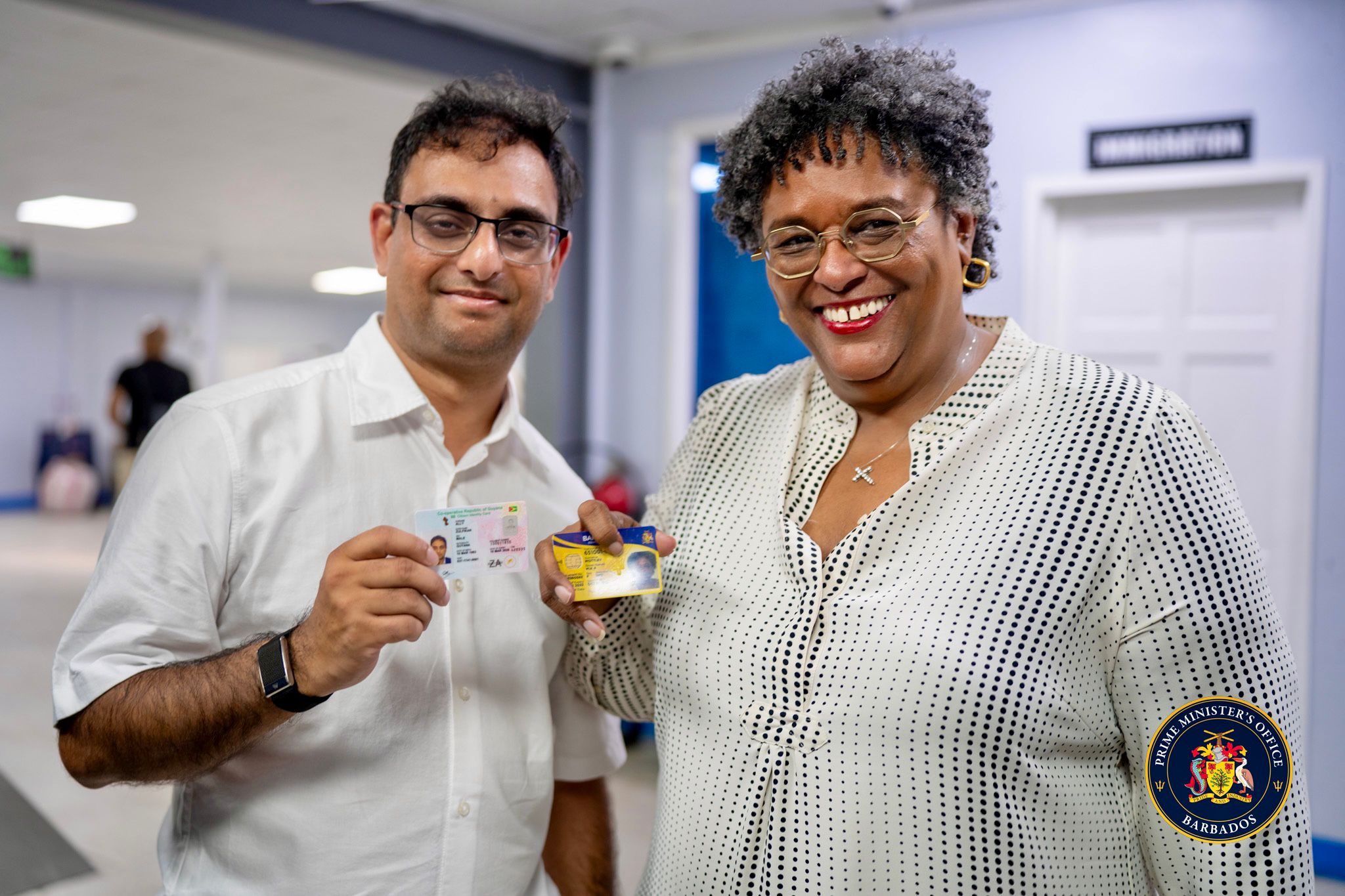
OPINION: Barbados-Guyana mutual recognition of IDs
Politics
Business
Legal
June 2, 2026
Share this article

Click to view full size
Once again, there is local concern in Barbados about a small step in fostering closer regional ties. Effective July 1, 2026, citizens of Barbados and Guyana will have two options to travel between their nations: by passport or by national identification (ID) card. Similar to the Enhanced Cooperation in Free Movement regime among four Caribbean Community (CARICOM) states (Barbados, Belize, Dominica, St Vincent and the Grenadines) that came into effect on October 1, 2025, the announcement has already stirred security, administrative and legal concerns. The concern is understandable and stems largely from a lack of information; that failure lies squarely with those responsible for communicating these changes.
ID Card use for travel is not novel. Some regional groupings around the world use ID Cards for travel. Within the European Union (EU), the 27 EU member countries and four countries of the Schengen area (Iceland, Liechtenstein, Norway and Switzerland) have the option to travel using their national ID cards. Similarly, nationals of the Gulf Cooperation Council (GCC) countries (Bahrain, Kuwait, Oman, Qatar, Saudi Arabia, and the United Arab Emirates) can use national ID cards for travel between member states. Closer to home here in the Caribbean region, the Organisation of Eastern Caribbean States (OECS) protocol members (Antigua and Barbuda, Dominica, Grenada, Montserrat, Saint Kitts and Nevis, Saint Lucia, and Saint Vincent and the Grenadines) can travel with a valid government-issued ID, whether a driver’s licence, national identification card, or voter’s card.
Possibilities with mutual recognition of ID cards
Politics
Business
Legal
Need the bigger picture?
Share this article
Comments (0)
Download our mobile app
The portable companion to gazettE. Get notifications, track read articles, and more. The latest news from Trinidad and Tobago, in one place.