Editorial | A red card for Infantino
Sports
Politics
July 8, 2026
Share this article

Click to view full size
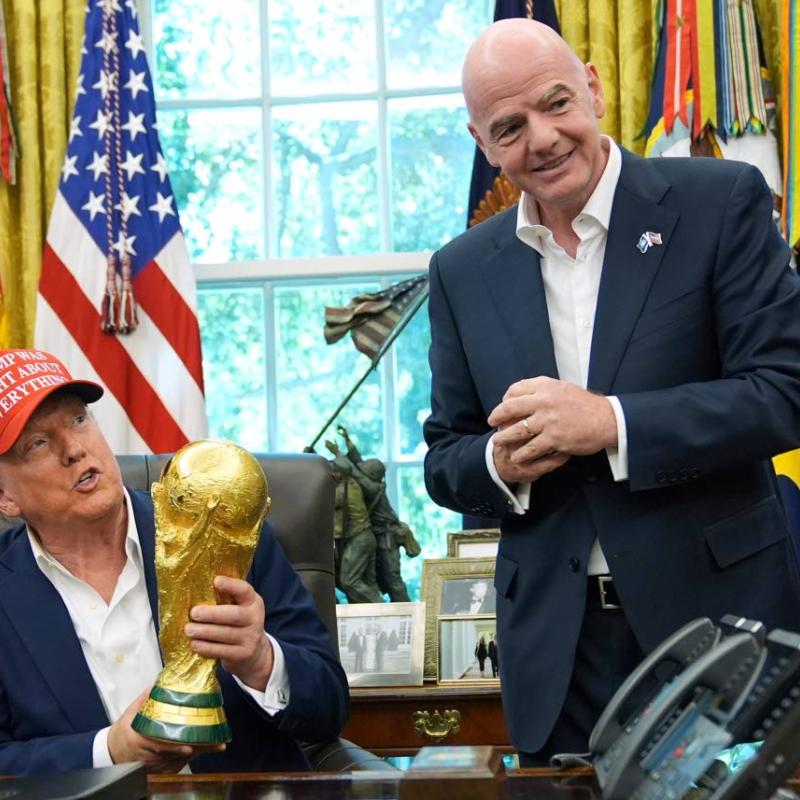
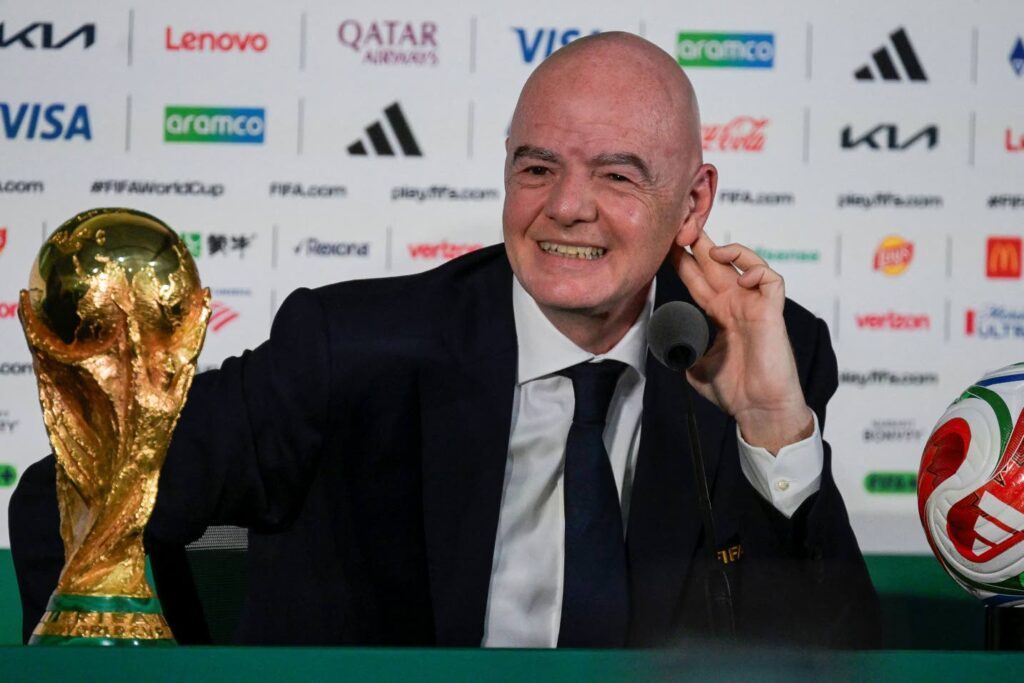
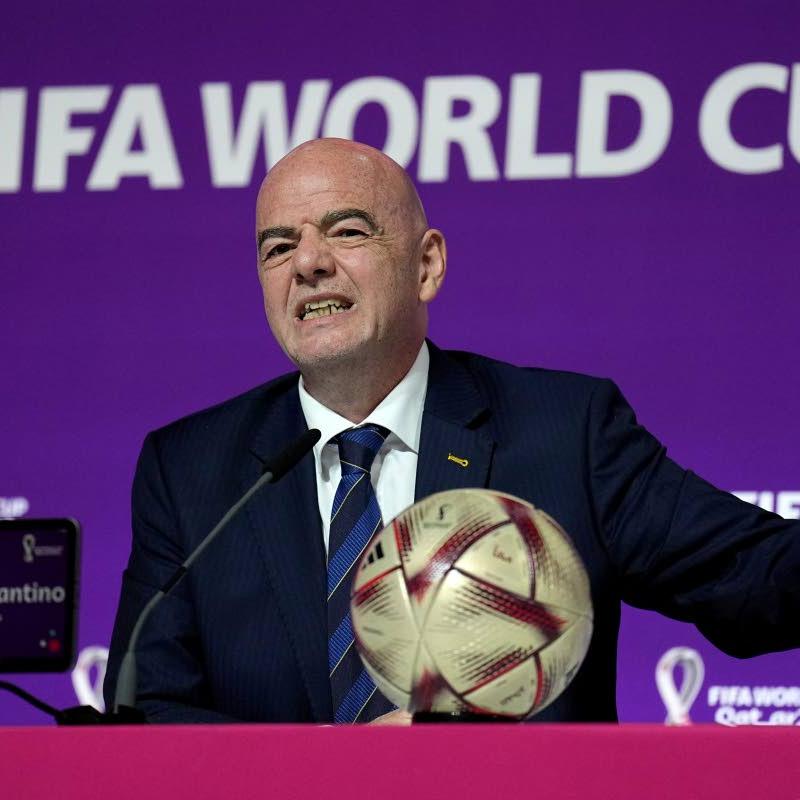
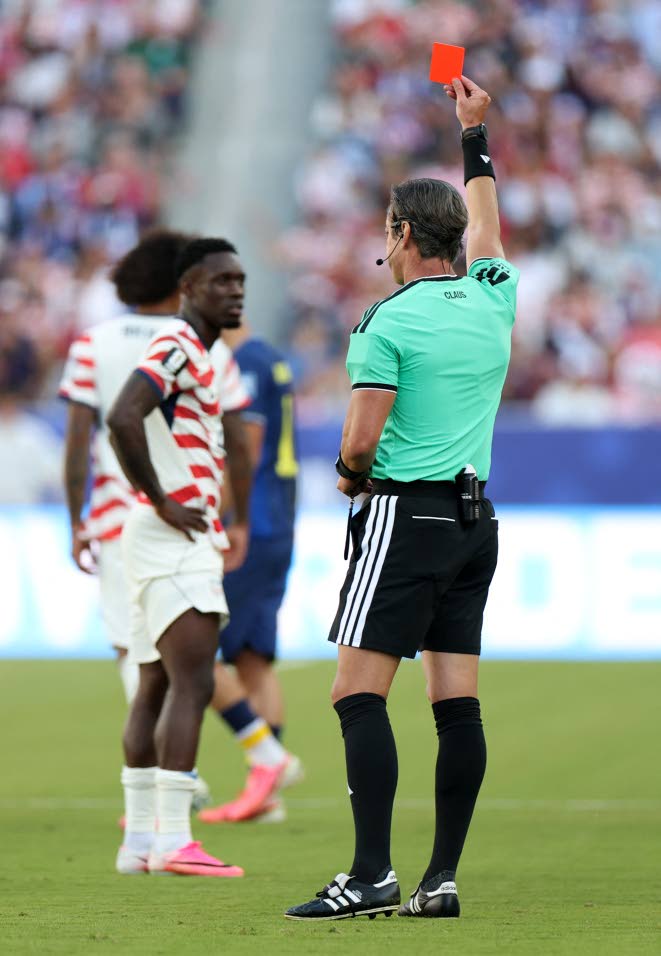
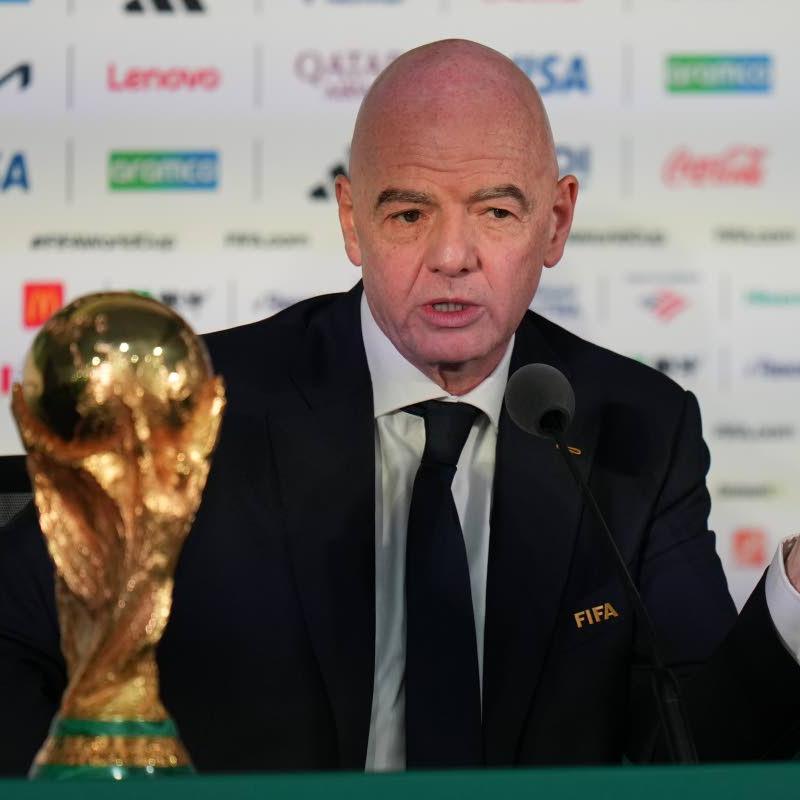
For subscribers to that kind of cosmic philosophy, Belgium’s 4-1 thrashing of the United States on Monday night in their round-of-16 clash at the FIFA World Cup may have seemed like expected karma. For this newspaper, it was a just outcome – not only because of the teams’ relative performances on the field of play. It was also poetic justice for the Folarin Balogun red-card affair and the manner in which FIFA President Gianni Infantino facilitated, and became a party to, Donald Trump’s attempt to corrupt ‘the beautiful game’. Mr Infantino has indicated that he will run for a third four-year term at the FIFA Congress in Rabat next March. The global football fraternity should deny him that opportunity. International football needs a new leader who does not kowtow to power and in whom the game’s stakeholders can repose trust. Without action now, FIFA – if it is not already there – risks falling back into the swamp of corruption from which it was supposed to have escaped with the reforms of 2016. Folarin Balogun is the US team’s top striker, having scored three goals for the Americans at the World Cup before their elimination from the tournament. In the United States’ previous match, a round-of-32 encounter against Bosnia-Herzegovina, which they won, Balogun was shown a red card for a tackle on central defender Tarik Muharemovic in which his studs came down on the Bosnian’s ankle. There can be, and are, disputes over whether the offence warranted a yellow card rather than an ejection. However, that was the decision of the Brazilian referee, Raphael Claus. In football, a red card carries an automatic suspension for the player’s next match and, depending on the severity of the offence, can result in additional punishment. Given those rules, Balogun should not have been available for the United States’ match against Belgium. None of the dozen players who previously received red cards at this World Cup played in their teams’ next match. In the history of the World Cup, only once before had an ejected player returned for the following match – Brazil’s Garrincha in 1962. However, that was before the automatic-suspension rule, when decisions on player eligibility were left to a committee. In the Balogun case, American power howled. Marco Rubio, the secretary of state, claimed that “America got screwed”, and there is evidence that he took his complaint to FIFA. Andrew Giuliani, the White House executive director for the World Cup, is also reported to have taken that argument to Mr Infantino. Howard Lutnick, the secretary of commerce, reportedly spoke either to the FIFA boss or to others high up in football’s governing body. But that was the small-bore stuff. Mr Trump, America’s moral slubberdegullion-in-chief, confirmed that he had spoken to Mr Infantino, asking for a review of Balogun’s automatic one-match suspension. Mr Infantino admitted speaking to Mr Trump on the matter but suggested that he gave the US president no assurances. [Given Mr Trump’s history, many will question whether he acted out of a genuine footballing interest in Balogun, whose parents are Nigerians, or even in the US team as a whole. More likely, this was an attempt to muscle in on, and appropriate for himself, some of the glamour and glory of the World Cup. What Mr Infantino ought properly to have done was forcefully remind the US president that he had no standing in this matter and that the rules were the rules and would be applied consistently. Instead, FIFA effectively overturned Balogun’s suspension, except that it would be reinstated if he committed another red-card offence within a year. FIFA offered no explanation for its decision to substitute Balogun’s suspension with probation, but said it acted under Rule 27 of the federation’s disciplinary code. The rule gives FIFA’s disciplinary body the authority “to fully or partially suspend the implementation of a disciplinary measure”. It rejected Belgium’s appeal against the decision, saying the Belgians had no standing. Not surprisingly, FIFA’s cynical act of corruption has been met with outrage in many parts of the world, including by the Union of European Football Associations (UEFA), of which Mr Infantino was once general secretary. “Football, like any other sport, relies on rules, which are the basis for fair, honest and transparent competition,” UEFA said in a statement. “Sometimes rules are open to interpretation. In this case, they are not.” The European body warned that “when the certainty of rules is no longer guaranteed by its guardians, the integrity of the game is at stake and the credibility of a competition is undermined”. The Jamaica Football Federation should echo those sentiments. AT TRUMP’S BECK AND CALLBut perhaps no one should be surprised by Mr Infantino who, drawing on the aura of Mr Trump’s power, has obsequiously rendered FIFA to the service of the US president. With Mr Trump hankering after, and failing to secure, a Nobel Peace Prize, Mr Infantino created the FIFA Peace Prize, which he awarded to the US president. Mr Trump vainly accepted. In May 2025, Mr Infantino arrived three hours late for a FIFA Congress in Asunción, Paraguay, because he was delayed returning from a Middle East tour with Mr Trump and US business leaders. Although he apologised, many European delegates had already walked out of the conference hall. FIFA supposedly reformed itself after the scandals and allegations of financial corruption that engulfed the organisation under Mr Infantino’s predecessor, Sepp Blatter. The new FIFA, however, appears to have become an open-access institution for the global power elite. For it to be better, Gianni Infantino can no longer remain its president.
Sports
Politics
Need the bigger picture?
Share this article
Comments (0)
Download our mobile app
The portable companion to gazettE. Get notifications, track read articles, and more. The latest news from Trinidad and Tobago, in one place.