CARICOM at 53: The Vision That United a Region
Politics
July 6, 2026
Share this article
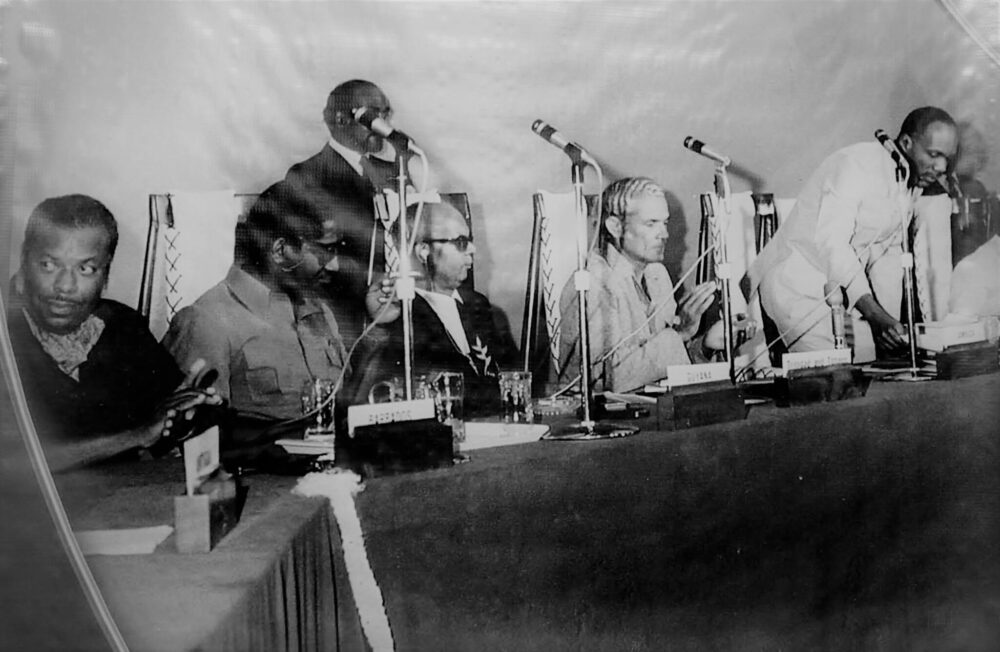
Click to view full size
Fifty-three years after the signing of the Treaty of Chaguaramas, the Caribbean Community (CARICOM) remains one of the world’s longest-standing regional integration movements—a powerful symbol of Caribbean resilience, self-determination and the conviction that the region’s future would be stronger through unity than division.
That vision was championed by four statesmen whose names have become inseparable from the Caribbean integration movement: Prime Ministers Errol Barrow of Barbados, Forbes Burnham of Guyana, Dr. Eric Williams of Trinidad and Tobago and Michael Manley of Jamaica. Their signatures on the Treaty of Chaguaramas on July 4, 1973, transformed decades of political aspiration into the Caribbean Community, creating an institution that has endured for more than half a century. The achievement was not without challenges.
CARICOM’s roots lie in the collapse of the British West Indies Federation in 1962. Although the Federation’s failure ended the Caribbean’s first formal experiment in political union, history records that its demise became “the real beginning of what is now the Caribbean Community.”
Politics
Need the bigger picture?
Share this article
Comments (0)
Download our mobile app
The portable companion to gazettE. Get notifications, track read articles, and more. The latest news from Trinidad and Tobago, in one place.