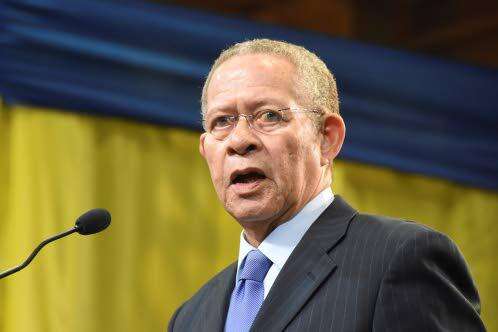
Imani Tafari-Ama | Faraway wars, nearer burdens
Politics
Business
Finance
July 12, 2026
Share this article
Click to view full size
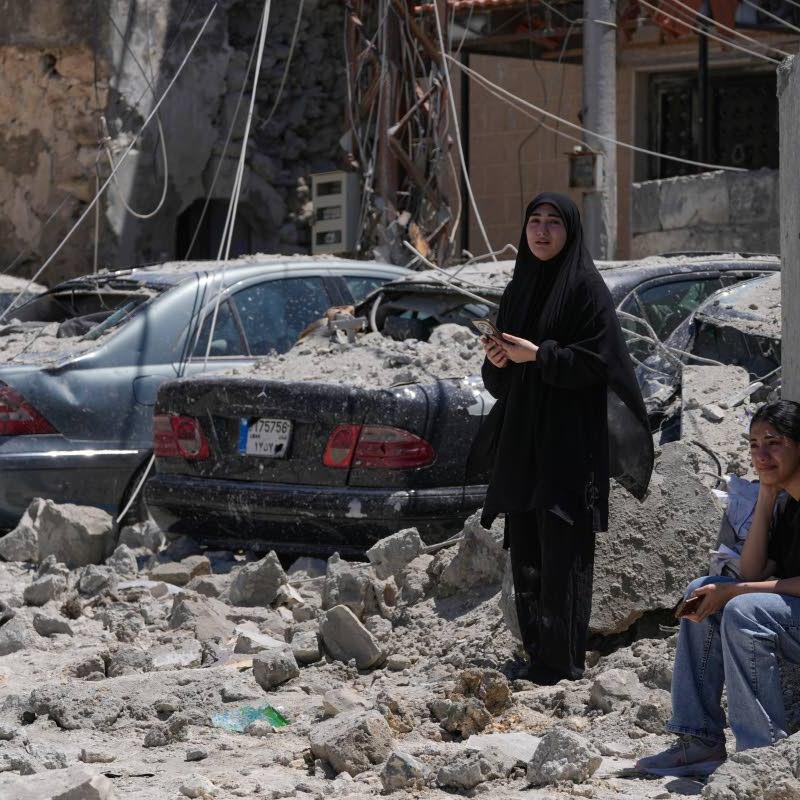
July 4 has long occupied a special place in the North American political imagination. This year, the United States (US) commemorated 250 years of independence, celebrating ideals of liberty, democracy, and self-determination. Yet, as fireworks illuminated American skies, another reality unfolded across the Middle East. Renewed hostilities involving United States, Israel, and Iran have cast a long shadow over an already volatile region.The juxtaposition could hardly be more striking. One nation celebrated its founding principles while the country it was attacking, whose civilization transcended thousands of years, grappled with the consequences of a war that it was threatened with for over four decades, sanctions, grief over slain political figures and ordinary citizens, and continued uncertainty caused by the daily prospect of wider regional escalation.Whether by coincidence or political calculation, these overlapping events serve as a reminder that history is a messy affair. National celebrations often exist alongside unresolved historical injustices and contemporary conflicts.The US story itself embodies this contradiction. The Declaration of Independence proclaimed that “all men (sic) are created equal”. However, the republic was built on the dispossession of Indigenous peoples and the enslavement of millions of Africans. These are not merely historical footnotes. They continue to shape debates over citizenship, equality, and belonging in the United States. While significant progress has undoubtedly been made over the past two and a half centuries, many Americans still argue that the promise of equal rights remains unevenly realised across racialised, gender, ethnic, and nationality lines.Against that backdrop, renewed confrontation between the US/Israel and Iran has assumed significance well beyond the Middle East. The collapse of diplomatic understandings and the return of military exchanges have once again placed the Strait of Hormuz at the centre of global attention. The strategic importance of this waterway is legendary. Before the war, a substantial share of the world’s seaborne oil exports, petrochemicals, and agricultural production enhancers freely passed through this narrow passage. Iran and Oman are located on both sides of this shipping corridor, giving them tremendous power and economic leverage under current conflict circumstances.History has repeatedly demonstrated that instability in the Strait of Hormuz rarely remains a regional issue. Even the threat of disrupted shipping is often enough to unsettle international energy markets, drive up insurance costs, and inject uncertainty into global supply chains. Financial markets react almost instantly while consumers feel the consequences much more slowly but no less painfully.For countries like Jamaica, these geopolitical struggles may appear distant. That distance collapses, though, when one considers how entangled the strings are that weave the patterns of the global economy. We do not need missiles falling from our skies to experience the consequences of war. Instead, they arrive through higher fuel bills, rising shipping costs, and increased prices for imported goods.Jamaica imports virtually all of its petroleum requirements. Consequently, fluctuations in global oil prices are transmitted quickly into the domestic economy. The first signs usually appear at the gas pump. Motorists pay more to fill their vehicles, transport operators face increased operating costs, and businesses throughout the supply chain begin adjusting prices to protect already narrow profit margins.The result is familiar to every Jamaican household. The cost of transporting food increases. Farmers pay more to move produce to markets. Manufacturers confront higher electricity and freight expenses. Supermarkets adjust prices to reflect increased logistics costs. Ultimately, consumers bear the burden, particularly those whose incomes have remained largely unchanged.This inflationary pressure is especially painful because it is largely imported. It originates not in Jamaican policy decisions but in conflicts over which Jamaicans have neither influence nor control. Yet we are compelled to absorb the economic shock all the same.Similarly, during the 1970s, Jamaica experienced the direct impacts of the oil embargo, which the Organisation of Oil Producing Exporting Countries (OPEC) levied on countries that supported Israel during the Yom Kippur war. More recently, like so many other countries around the world, Jamaica was caught in the web woven around the COVID-19 pandemic, which caused severe supply-chain disruptions. Small island states in the Caribbean may be far removed from the crime scenes, but they are nevertheless very vulnerable to global upheavals.Tourism, one of Jamaica’s principal foreign exchange earners, is also endangered by prolonged geopolitical instability. International conflicts create uncertainty, which, in turn, influences airline operations, travel insurance cost,s and consumer confidence. Even where Jamaica remains completely safe, disruptions elsewhere can affect travel patterns, and most importantly, visitor spending.The broader lesson is that globalisation has fundamentally altered the meaning of security. National security is no longer confined to military preparedness or territorial defence. It also encompasses energy supply, food security, and economic resilience. A conflict thousands of miles away can determine the price of bread in Kingston or the operating costs of a small business in Montego Bay.These realities should prompt sober reflection among policymakers. Jamaica cannot determine the outcome of conflicts in the Middle East, but it can strengthen its ability to withstand the shocks caused by external forces. Offering subsidies and other incentives to encourage widespread diversification of energy sources, acceleration of investment in renewable energy, improvement in food security, and reduction of excessive dependence on imported fossil fuels are no longer simply environmental aspirations. They have become strategic economic necessities.The events surrounding this year’s July 4 celebrations remind us that history often unfolds through uncomfortable contrasts. Commemorations of freedom can coincide with war. Celebrations of democracy can occur alongside profound geopolitical tensions. The challenge for smaller states such as Jamaica is not merely to observe these contradictions but to understand how they shape our own economic fortunes.Wars fought in distant deserts and contested waterways eventually arrive on our shores -not in the form of bombs but through inflation, uncertainty, and rising living costs. The conflict may be far away, but its consequences are already being felt in the pockets of ordinary Jamaicans. In an interconnected world, no nation is truly insulated from the turbulence of another. Geography may separate us from the battlefield, but economics ensures that we cannot escape its aftermath.
Imani Tafari-Ama, PhD, is a Pan-African advocate and gender and development specialist. Send feedback to i.tafariama@gmail.com and columns@gleanerjm.com
Politics
Business
Finance
Need the bigger picture?
Share this article
Comments (0)
Download our mobile app
The portable companion to gazettE. Get notifications, track read articles, and more. The latest news from Trinidad and Tobago, in one place.