“Bamboo is fast-growing” – Bharrat touts more use for Guyana’s old mining lands
Politics
Business
September 23, 2026
Share this article
Click to view full size
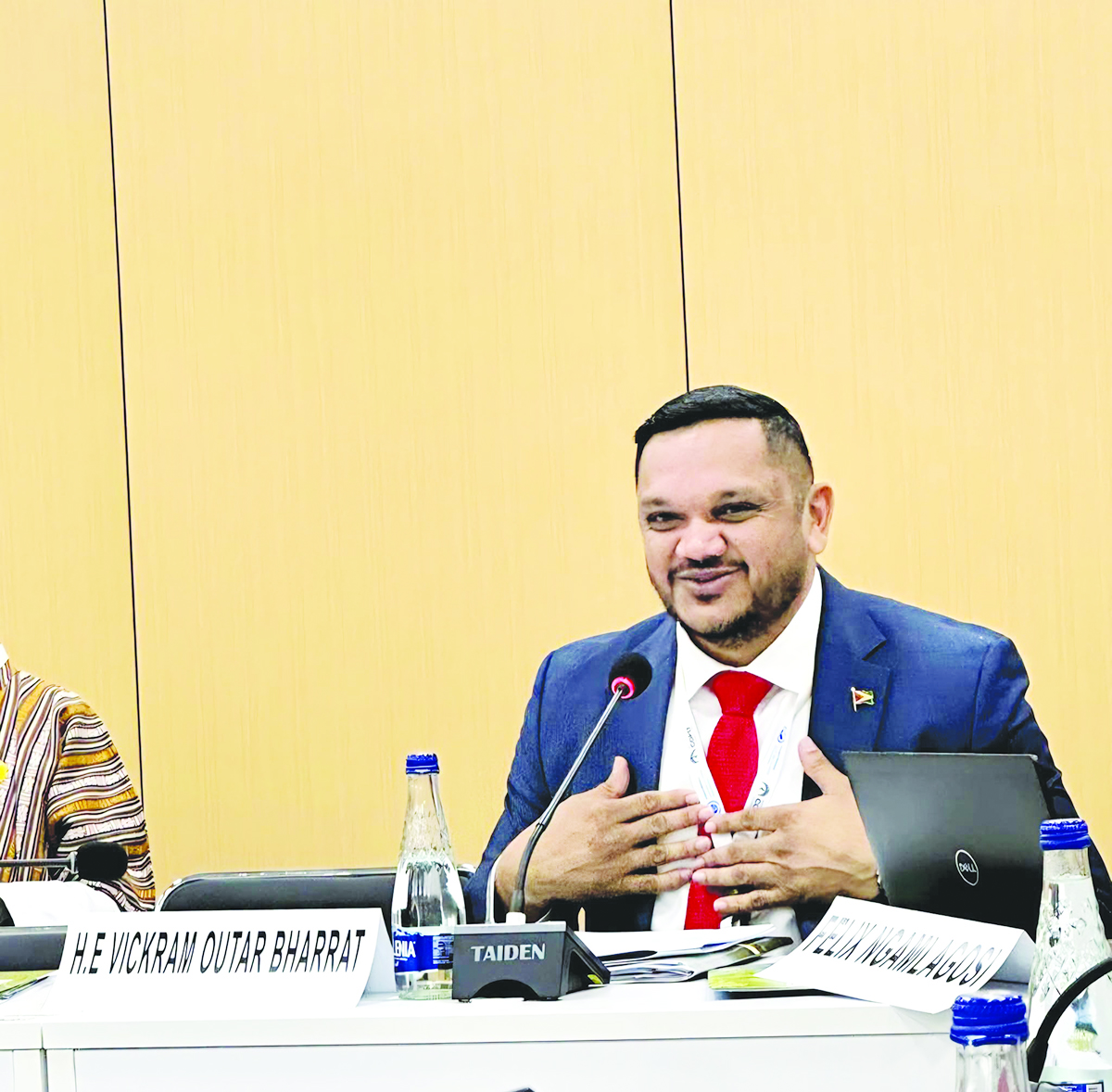
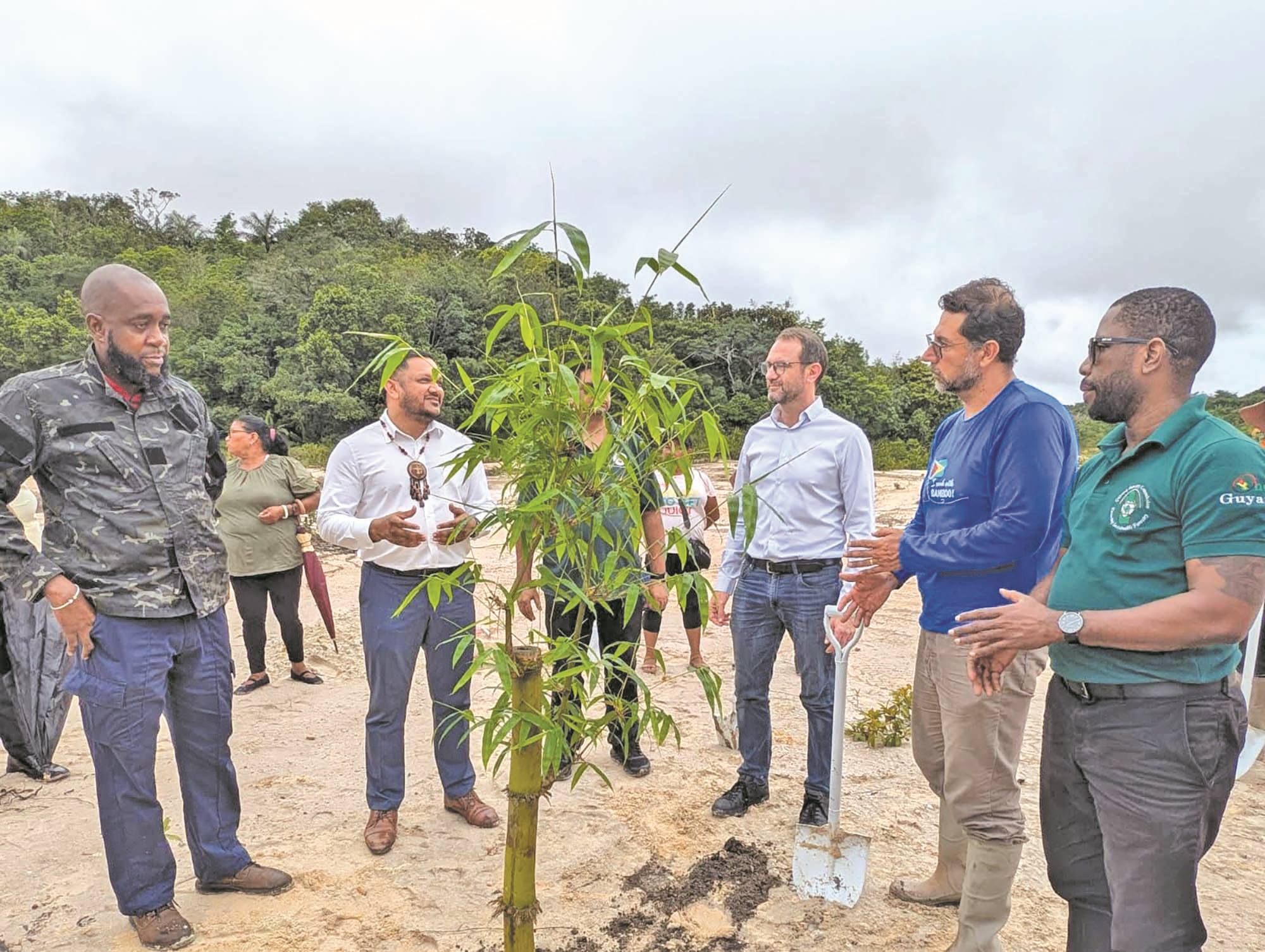
Natural Resources Minister Vickram Bharrat has posited that Bamboo has been introduced as part of efforts to reclaim old mining lands, as the Government has kicked off a pilot project in Region 10 targeting reforestation while creating new economic opportunities for communities in and around former mining areas. According to Bharrat, Guyana remains committed to protecting its forests and expanding the country’s protected areas, even as extractive activities continue. As such, the Guyana Geology and Mines Commission (GGMC) and the Guyana Forestry Commission (GFC) have been collaborating over the past three years on a reclamation and reforestation project, with bamboo playing a key role in efforts to restore former mining areas. “We are the second most forested country in the world, with 86% of Guyana covered by forests, second after Suriname. We have the lowest deforestation rate in the world. That is quite significant, really significant. We have about eight or nine per cent of our landmass that is protected. Those are the five protected areas, and we are committed to expanding those protected areas, including our waterways as well,” he said during a recent social media interview.
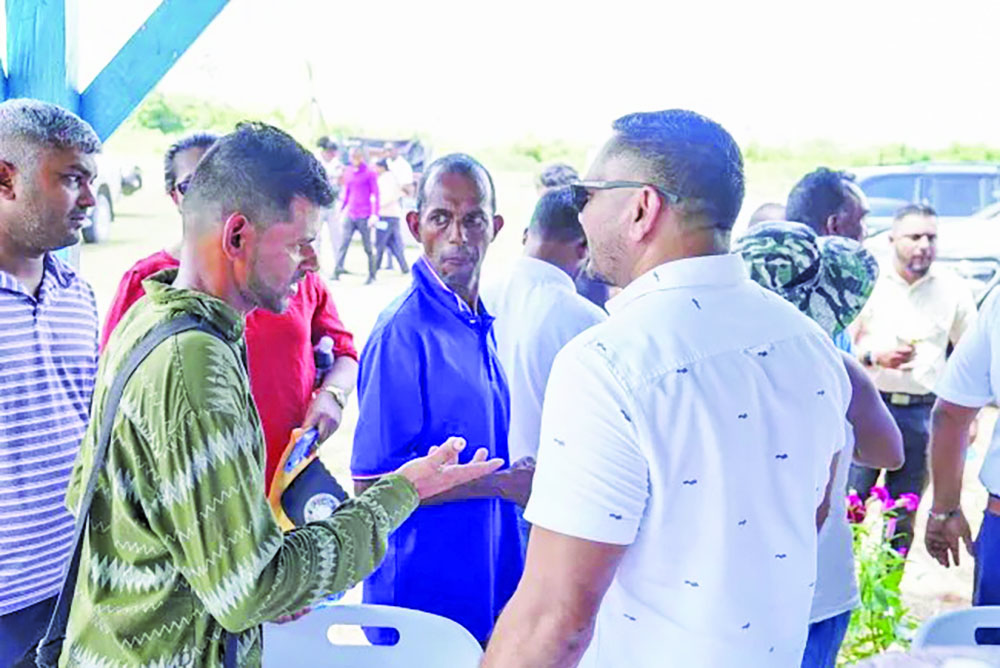
“So while we have been carrying out extractive activities, we are very, very cognisant that the environment and the protection of the environment is critical and important.” Meanwhile, Bharrat highlighted the use of bamboo in the reforestation efforts, citing its rapid growth rate as a key advantage. “We have done reclamation and reforestation, for example, in Region 10, Region One and Region Eight, and these are the old mined-out areas. In Region 10, we are targeting the old bauxite mines. We launched recently a bamboo project in Region 10, a pilot project with the support of the European Union (EU). We’re hoping now to do reforestation using bamboo because bamboo is fast-growing. It grows very fast. It has a lot of economic value to it because we import bamboo ceiling, flooring and furniture from other countries, whereas we can create these opportunities for the communities in and around those areas.” Since 2023, the National Forest Restoration Initiative (NFRI), a collaborative effort between the GFC and the GGMC under the Ministry, has provided a framework for exploring restoration, with consideration given to non-timber and agroforestry pathways alongside native forest species. In an expanded initiative, Natural Resources Minister Vickram Bharrat brought bamboo to the forefront as a fast-growing revegetation option to create short- to medium-term restored landscapes while supporting sustainable livelihoods and economies. Recently, a bamboo planting activity commenced under the project, “Piloting Bamboo for Restoration & Sustainable Livelihoods in Guyana.” The initiative is funded by the EU under the Euroclima programme and will be implemented with technical assistance from Expertise France and the International Bamboo & Rattan Organisation (INBAR). Almost 500 bamboo plants were planted in recent times at Coomacka, Region 10. This exercise will be replicated in other areas throughout the country. Bamboo plants of the species Bambusa vulgaris var. Vulgaris is being trialled for the restoration of a mined-out bauxite site in the old Coomacka Mines area, close to the Maria Elizabeth/Three Friends community, with technical guidance from INBAR. Mining communities in Region 10, including Maria Elizabeth/Three Friends, Coomacka, Old England/Siberien, Nottinghamshire and Richmond Hill, have been steady partners in designing a project that fits the context of their landscape.
Politics
Business
Need the bigger picture?
Share this article
Comments (0)
Download our mobile app
The portable companion to gazettE. Get notifications, track read articles, and more. The latest news from Trinidad and Tobago, in one place.