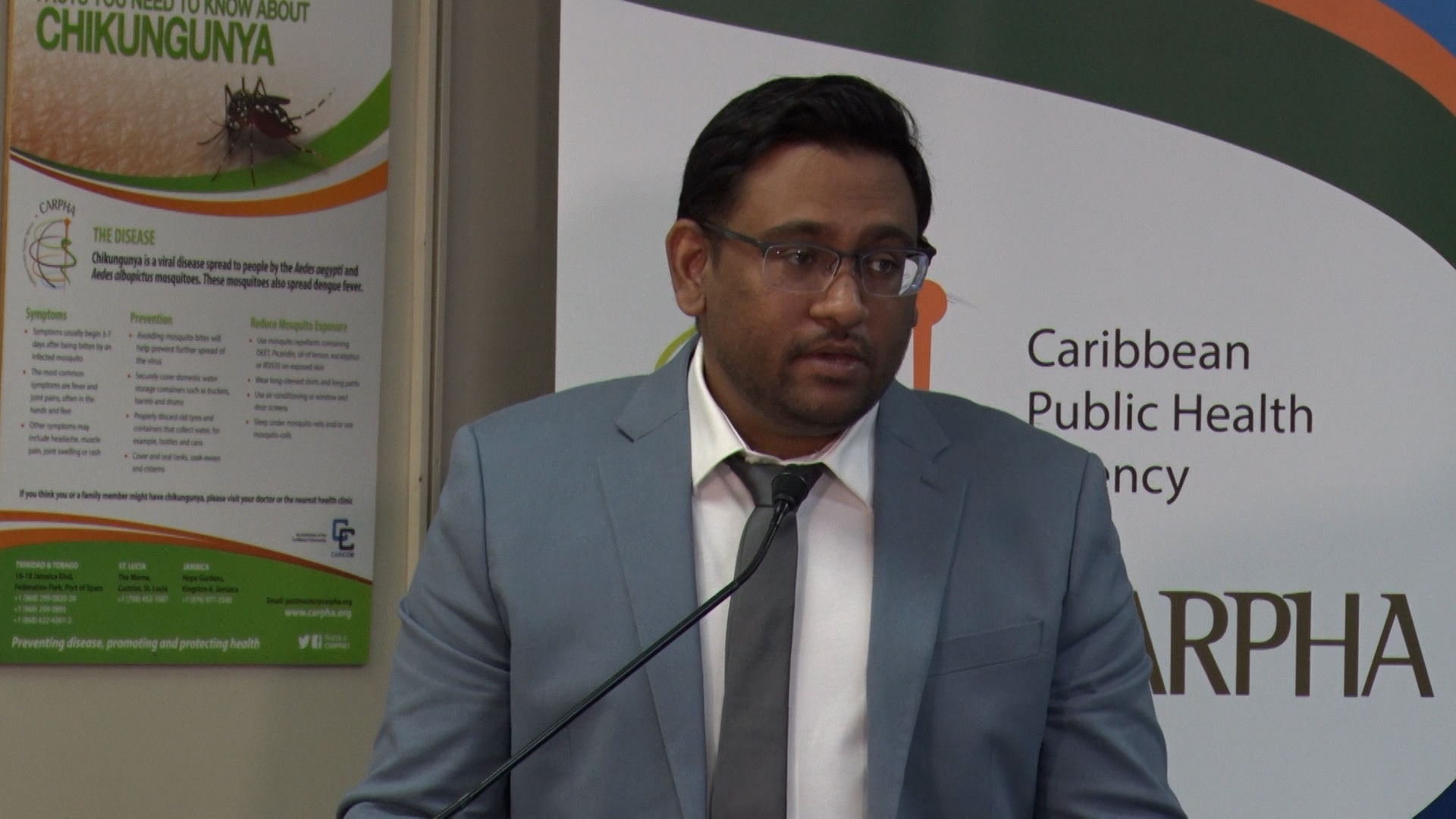
CARPHA flags chikungunya resurgence in the region
Health
February 20, 2026
Share this article
Click to view full size
The Caribbean Public Health Agency (CARPHA) is reminding its member states of the importance of the Integrated Vector Management approach in addressing the resurgence of the Chikungunya Virus and other arboviral diseases such as Dengue and Zika.
In a media release issued today, the agency noted that the Chikungunya Virus spreads through the bite of an infected Aedes aegypti mosquito. It described source reduction as the cornerstone of prevention and control against these mosquitoes, but said an Integrated Vector Management approach remains necessary—especially during outbreaks when authorities utilise chemical agents such as spraying and fogging to target adult mosquitoes and decrease the likelihood of disease transmission.
CARPHA said a core principle of Integrated Vector Management is Insecticide Resistance Testing studies. Following the acquisition and commissioning of CARPHA’s new Mobile Insectary Facility in October 2025, the agency reports it can now provide Insecticide Resistance Testing, including molecular testing, to member states.
Health
Need the bigger picture?
Share this article
Comments (0)
Download our mobile app
The portable companion to gazettE. Get notifications, track read articles, and more. The latest news from Trinidad and Tobago, in one place.